Cliptude: AI video generator for faceless YouTube videos
Make Your GTA 6 Videos With CliptudeLearn more →
Skip to Create Video
Cliptude
Log in Create Video

Make YouTube videos on autopilot with AI agents: ChatGPT, Claude, Claude Code, Grok, Muse Code, Codex, OpenClaw and Hermes Agent.

Cliptude is an agentic AI video generator for faceless YouTube videos between 6 and 60 mins. It turns a prompt or script into a finished documentary-style video with voiceover, footage, animated maps, and data charts. AI agents plan, generate and direct every scene, and you review the plan before anything renders.

Create Video Watch a real job

Watch one real job, start to finish

Cliptude is an AI video generator for faceless YouTube videos. It turns a prompt or script into a finished documentary-style video with voiceover, footage, animated maps, and data charts.

Below, this job replays stage by stage: the script, the voice, the timeline and the render.

New video Ready

What is the video about?

Blockbuster and Netflix, 2000 to 2014

Format
Faceless Documentary
Voice
Jeff - Essex North London accent
Narration
8:38
Made with
Cliptude web app

Real job a263b7f8 · 17 Nov 2026

Script and voice Jeff - Essex North London accent · ElevenLabs

1,493 words

8:38 of 8:38 narrated

95 sentences

  1. In the autumn of two thousand, two young founders flew to Dallas for a meeting they thought could save their company.
  2. Reed Hastings and Marc Randolph ran a small money-losing business that mailed DVDs to people in red envelopes.
  3. Across the table sat John Antioco, the chief executive of Blockbuster, the most powerful name in home entertainment.
  4. The founders made a simple offer: buy us for fifty million dollars, and we will run your brand online.
  5. Antioco's team reportedly struggled not to laugh.
  6. The meeting ended, the founders flew home, and Blockbuster went back to running the empire it had spent fifteen years building.
  7. To understand why that offer looked so small, you have to understand how big Blockbuster had become.
  8. The first Blockbuster store opened in Dallas in nineteen eighty-five.
  9. Its founder, David Cook, had a background in computer databases, and he built something the small video shops of the day could not match: a bright, clean store with thousands of tapes and a computer system that tracked every one of them.
  10. Two years later, a businessman named Wayne Huizenga bought control of the company and turned it into a machine for expansion.
  11. At its fastest, Blockbuster was opening a new store roughly every seventeen hours.
  12. Huizenga had done this before.
  13. He had built Waste Management into a giant by buying up small rubbish collectors one town at a time, and he used the same playbook on video rental.
  14. Blockbuster bought regional chains, rebranded them overnight, and filled every new store with more copies of the newest releases than any independent shop could afford.
  15. Hollywood studios sold tapes to rental shops for as much as sixty or seventy dollars each, so scale was everything.
  16. The bigger Blockbuster grew, the better deals it could demand, and the more customers walked past the little local shop to the big blue and yellow sign down the road.
  17. By nineteen ninety-four, the media giant Viacom paid about eight-point-four billion dollars to own it, and the growth kept coming.
  18. At its peak in two thousand and four, Blockbuster had around nine thousand stores around the world, employed tens of thousands of people, and brought in close to six billion dollars a year.
  19. Friday night in much of America meant one thing.
  20. You drove to Blockbuster, walked the aisles, and argued about what to watch.
  21. That same year, Viacom decided it no longer wanted to own a chain of video stores.
  22. It split Blockbuster off as an independent company.
  23. But before it let go, Blockbuster paid out a special dividend of around nine hundred million dollars, much of it to Viacom, and it borrowed heavily to do so.
  24. On the day it became independent, the biggest name in home entertainment was already carrying a mountain of debt.
  25. It would turn out to be the worst possible moment to be short of cash because the most expensive fight in the company's history was about to begin.
  26. But hidden inside that business was a weakness that customers felt every week: late fees.
  27. Blockbuster charged a penalty every time a tape or a disc came back after its due date.
  28. Customers hated it.
  29. Shareholders loved it.
  30. In the year two thousand alone, late fees brought in an estimated eight hundred million dollars, a large share of the company's revenue.
  31. The company had quietly become dependent on punishing the very people it was supposed to serve, and that was exactly the opening the small company from California needed.
  32. Netflix had a different idea.
  33. Pay one monthly fee, keep a disc as long as you want, and the next one arrives in your mailbox when you send the last one back.
  34. No due dates, no penalties, no driving across town on a Sunday night.
  35. In the beginning, it barely mattered.
  36. Netflix was tiny.
  37. It was losing money, and the dot-com crash had just wiped out hundreds of internet startups.
  38. To Blockbuster's leadership, a mail order DVD company did not look like a threat.
  39. It looked like a niche.
  40. There was a second shift happening at the same time, and it worked in Netflix's favour.
  41. In the late nineties, the studios changed how they priced films.
  42. Instead of expensive tapes, new releases arrived on DVD, a thin disc that cost about twenty dollars and weighed almost nothing.
  43. A tape could never survive the post, but a DVD fitted inside an ordinary envelope and cost less than a dollar to mail.
  44. The format that Blockbuster's shelves were slowly filling with was the same format that made a mail order rival possible.
  45. Netflix also learned something about its customers that a store never could.
  46. Every rating, every queue, and every return told the company what people actually liked.
  47. It built a recommendation system that pushed subscribers toward older, cheaper films they had never heard of instead of fighting over the same handful of new releases.
  48. Blockbuster sold what was on the wall.
  49. Netflix was starting to know what was in your head.
  50. Then the numbers started to move.
  51. By the mid twothousands, Netflix had millions of subscribers, and they were leaving Blockbuster's stores to join it.
  52. Antioco saw the danger.
  53. In two thousand and four, he launched Blockbuster Online.
  54. In two thousand and five, he did something that shocked Wall Street.
  55. He scrapped late fees, giving up hundreds of millions of dollars a year in revenue.
  56. And in two thousand and six, he launched a plan called Total Access, which let customers rent discs by mail and swap them for free in any store.
  57. It was the one thing Netflix could not do.
  58. For a moment, it worked.
  59. Subscribers poured in, and Netflix's own leadership later admitted they were worried, but the turnaround was expensive.
  60. Dropping late fees and pushing online cost the company hundreds of millions of dollars, and some of the biggest shareholders were losing patience.
  61. The activist investor Carl Icahn had already forced his way onto the board, and he clashed with Antioco over spending and pay.
  62. In two thousand and seven, Antioco left the company.
  63. His replacement, Jim Keyes, came from the world of convenience stores.
  64. He believed the future still belonged to the physical shop.
  65. He cut spending on the online service, raised prices, and pushed to turn Blockbuster stores into places to buy snacks, phones, and games.
  66. The momentum that Total Access had built began to slip away.
  67. At the same moment, the ground was moving under the entire industry.
  68. A company called Redbox was putting bright red kiosks outside supermarkets, renting new releases for a single dollar a night.
  69. And in two thousand and seven, Netflix began letting subscribers stream films directly over the internet.
  70. Every year, fewer people needed a store at all.
  71. Then the financial crisis of two thousand and eight arrived.
  72. Blockbuster was carrying around a billion dollars of debt.
  73. Its sales were falling and lenders were growing nervous.
  74. The stores that had once been its greatest strength had become its greatest burden.
  75. Thousands of leases, thousands of staff, and shelves full of discs that fewer people wanted to rent.
  76. The company tried to catch up.
  77. It put its own rental kiosks outside shops, signed deals to put its films on televisions and set-top boxes, and launched its own download service.
  78. But each attempt arrived years after a rival had already won the customers, and every one of them had to be paid for by a shrinking chain of stores.
  79. By two thousand and nine, Blockbuster was losing hundreds of millions of dollars a year, and its share price had fallen below a dollar.
  80. In September twenty ten, Blockbuster filed for bankruptcy.
  81. The next year, the satellite company Dish Network bought what was left at auction for around three hundred and twenty million dollars.
  82. A brand that had once been worth billions sold for a fraction of its peak value.
  83. Dish kept a few hundred stores open for a while, but one by one, they closed.
  84. By early twenty fourteen, the last company-owned Blockbuster stores were gone, except for one.
  85. In the small city of Bend, Oregon, a single franchise store kept its doors open.
  86. It still rents films.
  87. It still has the blue and yellow sign.
  88. And people now travel from around the world just to stand inside the last Blockbuster on Earth.
  89. As for the company that Blockbuster once refused to buy for fifty million dollars, Netflix went on to reshape how the world watches television, with hundreds of millions of subscribers and a value measured in the hundreds of billions.
  90. It is tempting to say Blockbuster failed because it ignored the future.
  91. But that is not quite the story.
  92. Blockbuster saw the future.
  93. Its own leader built a service that briefly beat Netflix at its own game.
  94. What it could not do was give up the business that was paying the bills today to build the one that would matter tomorrow.
  95. And by the time it tried, the world had already moved on.

Made through the Cliptude web app, voiced by Cliptude.

Every shot, planned and placed

The plan set 98 beats and 79 graphics against the narration. Cliptude sourced, cut and timed them on this timeline, with 11 transitions and captions on every line.

Visuals
138
Graphics
33
Captions
0
Sound effects
113

8:38, cut.

Every frame on this timeline is the actual frame from the finished render, at that moment.

Render Queued

0% Composing 138 visuals, 33 graphics and 0 captions

Blockbuster: the empire that said no 8:38 · 346 credits

Published, and watched

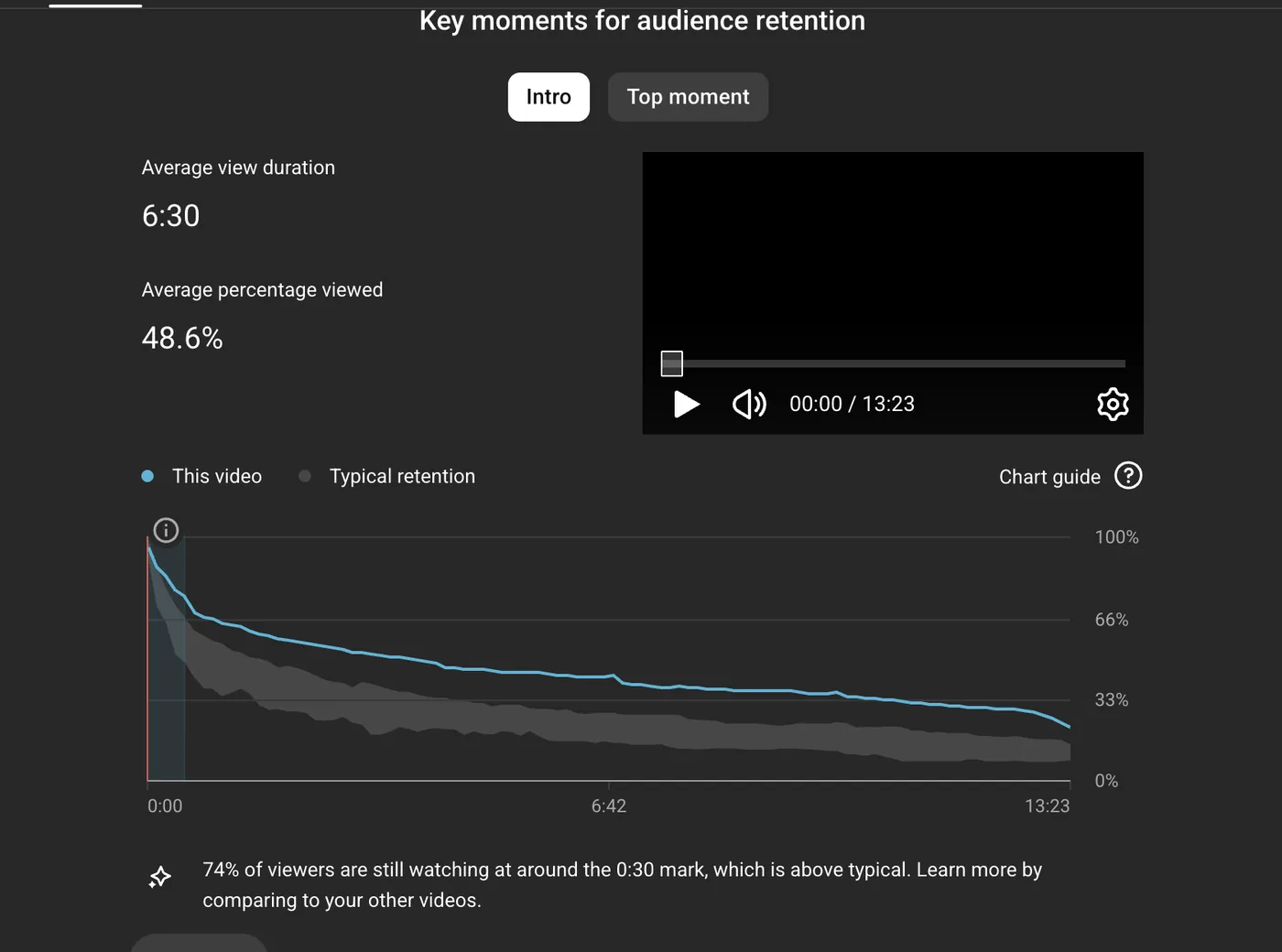
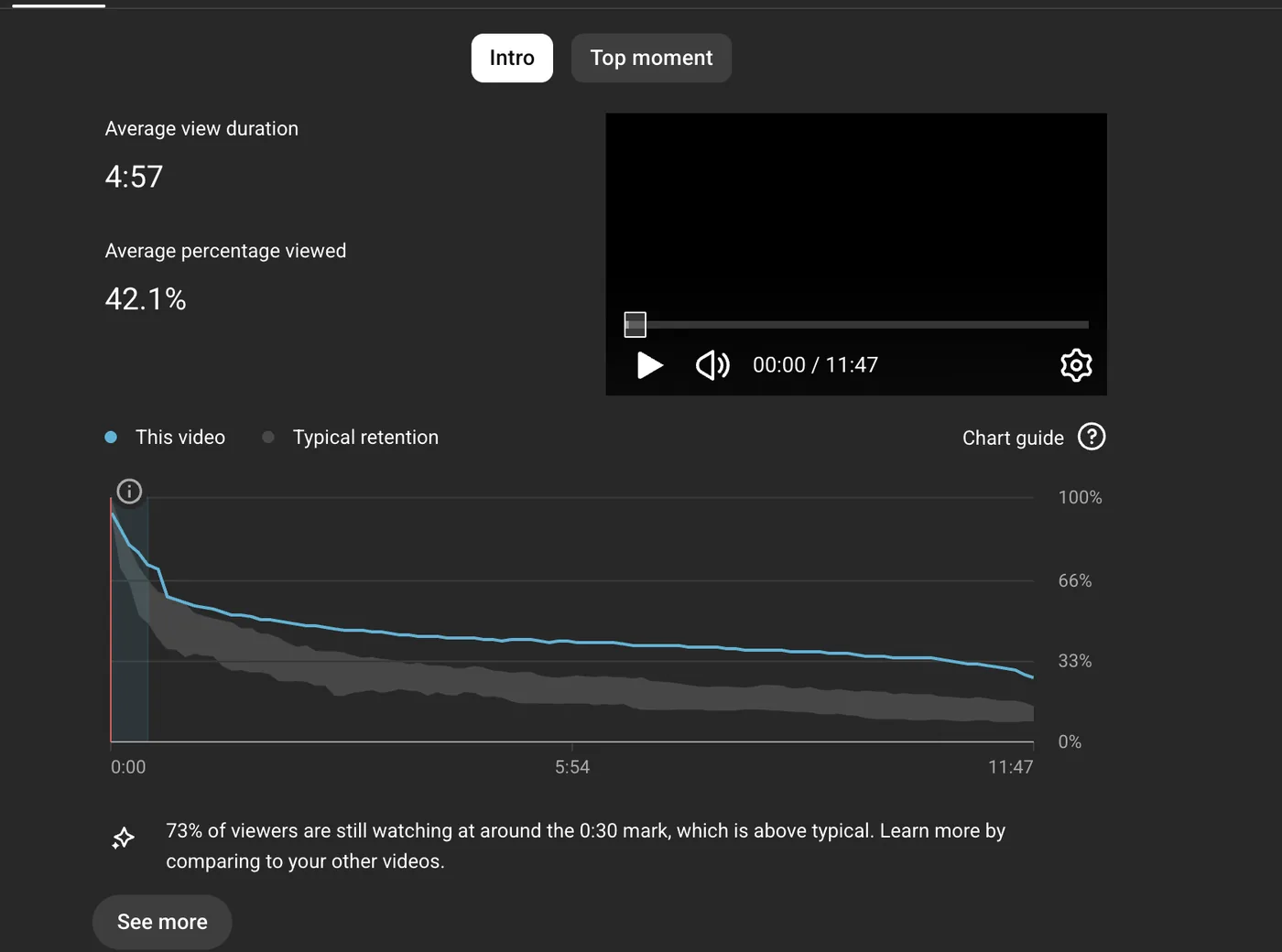
Videos made with Cliptude, as their creators' YouTube Studio reports them.

Creators signed up
7,500+
Videos rendered
1,900+
Formats
4
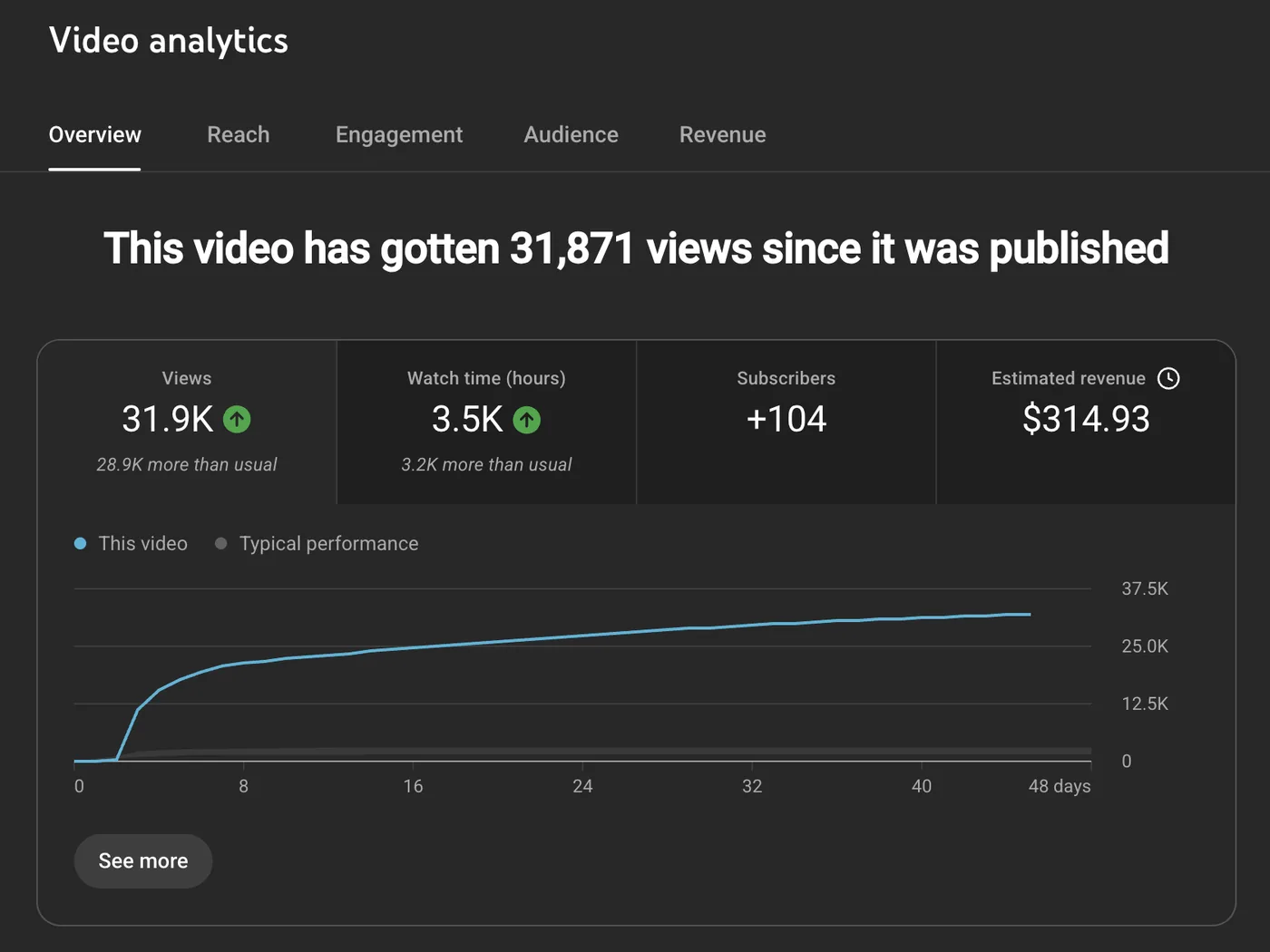
YouTube Studio: 31.9K views since publishing
31,871 views since publishing
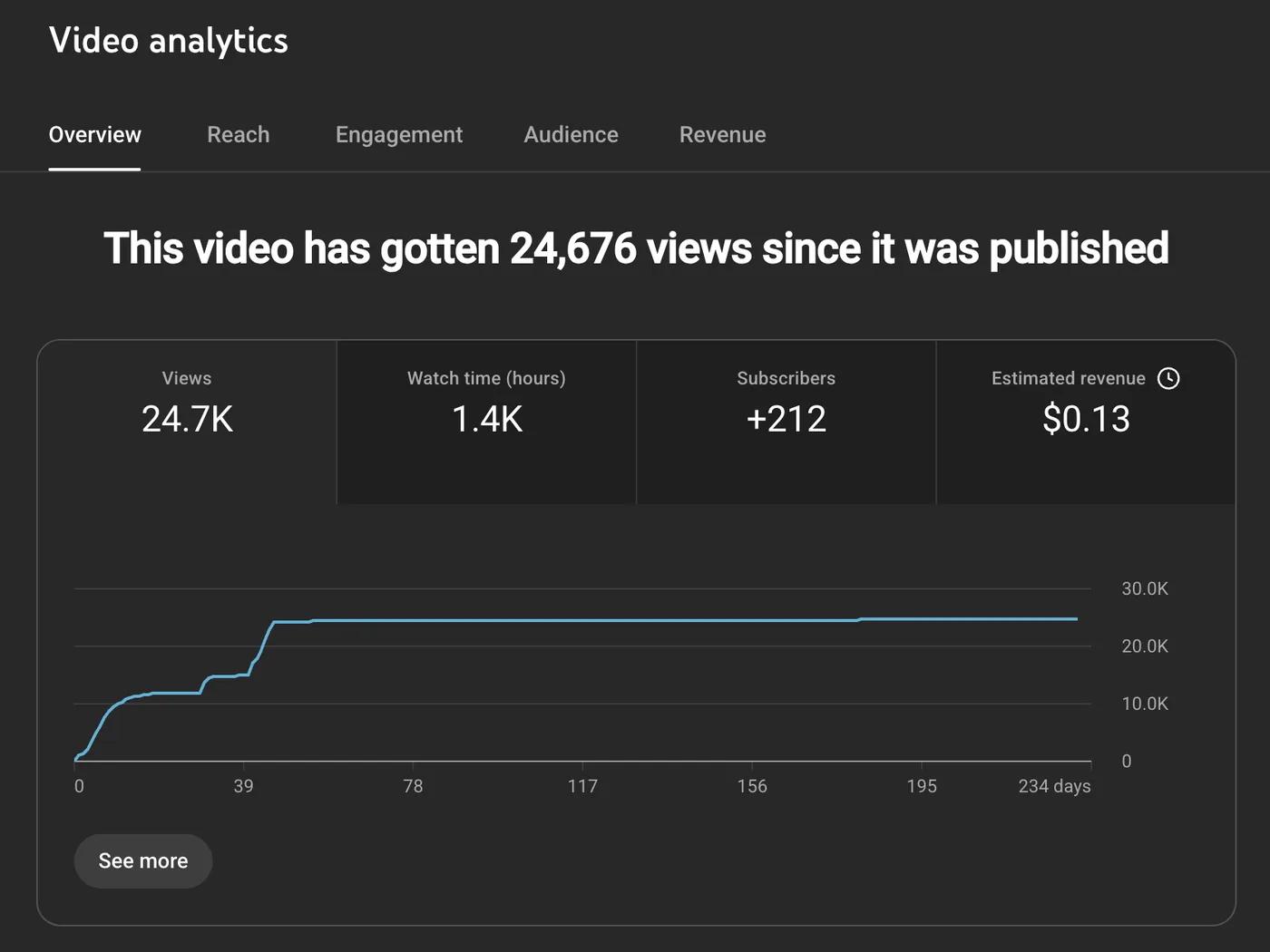
YouTube Studio: 24.7K views since publishing
24,676 views since publishing
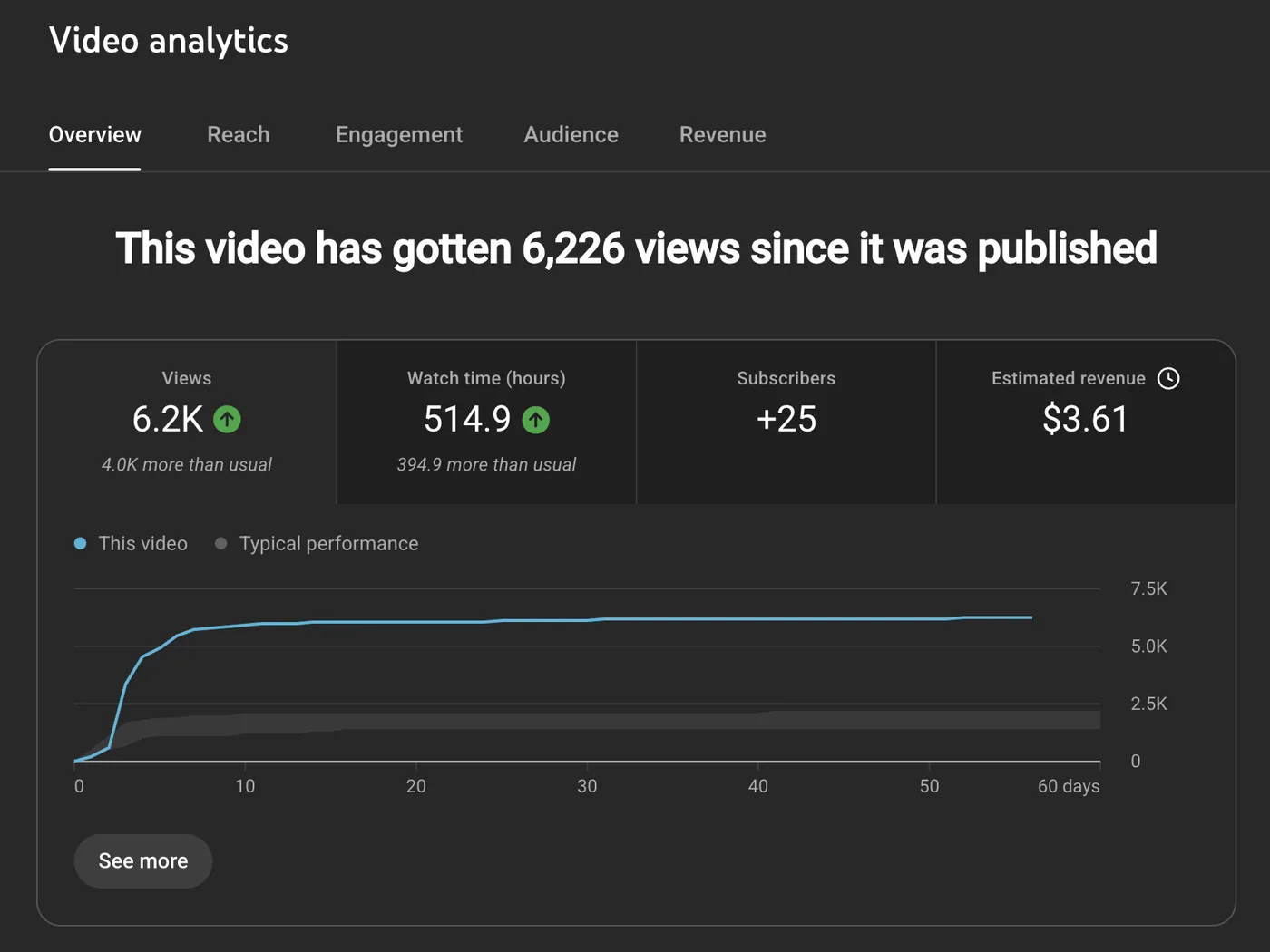
YouTube Studio: 6.2K views since publishing
6,226 views since publishing
Audience retention: average view duration 6:30, 48.6% viewed
Average view duration 6:30 · 48.6% viewed
Audience retention: average view duration 4:57, 42.1% viewed
Average view duration 4:57 · 42.1% viewed

Comments from creators

Read all reviews or leave your own
  • Flying Life (Jeff) Cliptude user

    Developers always at hand

    The developers of Cliptude are always at hand to solve issues. Really enjoy using the system.
  • Blaxon Media Network Cliptude user

    Exceeded my expectations

    I've watched the video, and I must say, I'm really impressed with what you've done. This is exactly the kind of documentary I've been trying to create. The visuals, music, graphics, transitions and everything put together were really good. Honestly, the final result exceeded my expectations.
  • J YouTube creator

    A good and profitable system

    Video on B roll is good — it's a good and profitable system!
  • wedontfwhiroshima YouTube creator

    4 videos with thumbnails for $49

    My review on Cliptude is very positive, and I'm so optimistic about this project growing even bigger. There aren't many tools that offer this for YouTube long form especially at that price — you can make 4 videos with thumbnails for $49.
  • chris1122 YouTube creator

    Simple and fast from script to edit

    I just bought Cliptude for my YouTube channels, and I'm really impressed with it so far. It makes the whole video creation process simple and fast. The AI tools for scripts, voiceovers, and editing work surprisingly well — definitely happy with my purchase.
  • Marketing Agency Cliptude user

    Exceptional service

    I'm genuinely impressed by the level of support provided. The response was quick, and my issue was resolved smoothly. Exceptional service! Jordan you are the BEST support, I have ever seen.
  • Matvey Fedoseev YouTube creator

    All I bring is an idea

    I'm not a very creative person, but I have a strong technical background. I had no idea where to start with my YouTube channel or how to produce videos. Cliptude completely covered all my needs — all I have to bring is an idea, and it takes care of the rest.
  • Cliptude user YouTube creator

    Voiceover and visuals in sync

    Overall, I had a very good experience using this platform. The video quality was impressive, and the synchronization between the voiceover and visuals was seamless and engaging. Overall, this is a very promising tool with great potential.
  • henrik YouTube creator

    Couldn't tell AI from human

    Cliptude really helps me create good quality videos without spending a fortune, and you truly couldn't tell whether AI or a human made it. It has great animations and combines the clips for your video together really well. I would highly recommend it.
Message from a creatorMessage from a creatorMessage from a creatorMessage from a creatorMessage from a creatorMessage from a creatorMessage from a creator

Every format for YouTube

Credits per finished minute, charged after the render. The create screen shows the estimate for your length first.

Avatar Video

A lip-synced presenter with AI scenes, or a short avatar intro over the rest of the video.

52 credits/min

AI footage. An intro-only avatar uses the faceless documentary rate for its voice.

Create Video Avatar video guide

Faceless Documentary

Narrated long-form documentary with footage, maps, and charts. No host on camera.

22–40 credits/min

By voice: 22 credits per minute with your own voiceover, 28 with Cartesia and 40 with ElevenLabs. Caldera adds 5.

Create Video

Faceless Top 10

Ranked list videos paced from the last item to number one, with footage cut to the narration.

22–40 credits/min

By voice: 22 credits per minute with your own voiceover, 28 with Cartesia and 40 with ElevenLabs. Caldera adds 5.

Create Video

2D Animation

Full-bleed flat vector scenes. Keep them as stills, or animate each scene.

42–60, or ~138–164 for video

Stills are 42–60 credits/min on Cinder depending on the voice, 5 more on Caldera. Video animation is about 138 credits/min at 720p on Cinder.

Create Video 2D animation guide

Billing

Yearly billing Save 20%
  • Starter

    $15/mo billed yearly

    • 1,100 credits a month
    • About 50 minutes with your own voiceover
    • About 28 minutes with ElevenLabs voices
    Choose Starter
  • Lite

    $39/mo billed yearly

    • 2,850 credits a month
    • About 130 minutes with your own voiceover
    • About 71 minutes with ElevenLabs voices
    Choose Lite
  • Creator Most popular

    $95/mo billed yearly

    • 7,000 credits a month
    • About 318 minutes with your own voiceover
    • About 175 minutes with ElevenLabs voices
    Choose Creator
  • Pro

    $255/mo billed yearly

    • 19,000 credits a month
    • About 864 minutes with your own voiceover
    • About 475 minutes with ElevenLabs voices
    Choose Pro

Charged only after the video renders. Cancel anytime. A 1-hour render-only video: 900 credits, $12.00–$15.55. Compare all plans and pay-as-you-go credits.

Editing it yourself, or Cliptude
StepYourselfCliptude
ScriptResearch and write itResearched from a prompt, or paste yours
VoiceoverRecord it or hire a narratorAI voices, or your own voice clone
FootageSearch, license and cut clipsSourced and cut to the narration
Charts and mapsBuild each one by handGenerated from the numbers in your script
First cutDays to weeksHours

Help

Will the video look like generic AI?

Documentaries and Top 10s are cut from real footage, maps, and charts. 2D animation is drawn for the script. Avatar scenes are generated for that video. You approve the script, voice, and credit estimate before rendering, then adjust the cut in the timeline editor.

Can I use my own script or voice?

Yes. Paste a finished script or upload a voiceover. You still review the plan and the credit estimate before the video is rendered.

How are credits calculated?

The rate depends on the format and the voice. A faceless documentary or Top 10 on Cinder costs 22 credits per minute with your own voiceover, 28 with Cartesia and 40 with ElevenLabs, and Caldera adds 5. Avatar video with AI footage is 52. 2D animation with moving video is about 138. The create screen shows the estimate for your length before you start, and you are charged only after the video renders successfully.

Do you offer refunds?

Read the full details on our refund policy.

How does it find footage?

Documentary and Top 10 formats use clips from online sources plus licensed stock and public-domain footage, cut to the narration. Maps and charts are generated. 2D animation and avatar scenes are made for the script instead of pulled from a clip library.

You own everything

Full commercial rights, no watermark.

Cliptude exports a ZIP project with an FCP7 XML timeline for DaVinci Resolve, Premiere Pro, and Final Cut. The file includes separate audio tracks and the raw media, so you can fine-tune the edit outside Cliptude.

Where the picture comes from

  • Online sources. Documentary and Top 10 cut real clips that match the narration.
  • Stock. Licensed stock and public-domain footage fill the gaps.
  • Generated. Maps, charts, 2D animation and avatar scenes are made for the script.
  • Yours. Paste a finished script or upload your own narration.

Run it from your agent

The job above was made through the Cliptude web app. Paste this into Claude Code, Claude, ChatGPT, Codex or any MCP agent:

Connect the Cliptude MCP server at https://mcp.cliptude.com/mcp and sign in. If you can't use MCP, install the CLI with `npm i -g @cliptude/cli` and run `cliptude auth login`.

Make a 10-minute YouTube documentary about [your topic]. Set it up with me using Cliptude's pickers (voice, music, background, style), one at a time. Write the script and let me read it, direct every scene with real footage, maps and charts, and show me the review card with its cost before you build. Then render and show me the publish kit.

MCP server, CLI and API

New video

Waiting for your prompt

You review the script, voice and credit estimate before anything renders. A faceless documentary is 22–40 credits a minute, and you sign in with Google first.