YouTube demonetized: what it means, and every reason YouTube gave in November 2026
The short answer
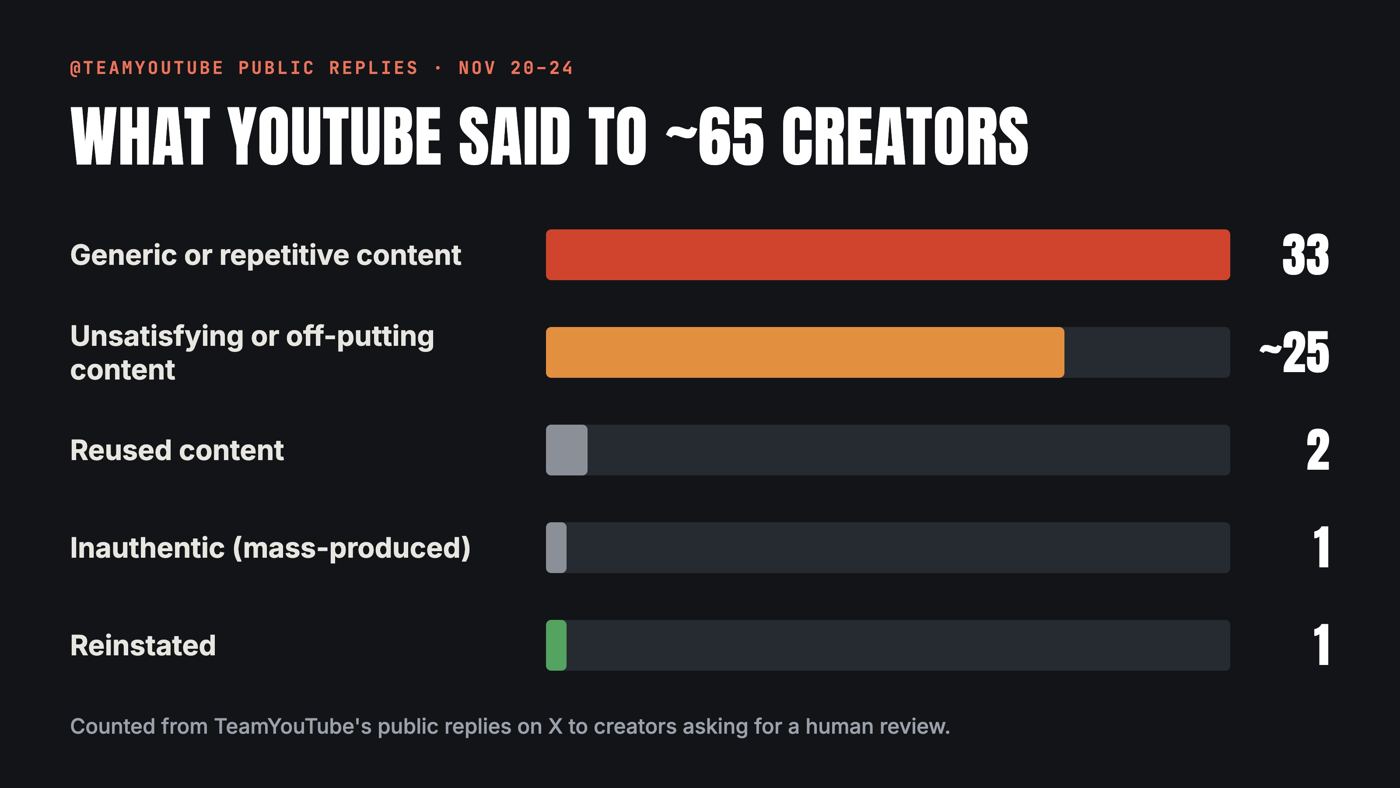
Demonetized on YouTube means YouTube has stopped a video or a whole channel from earning ad money: a single video can lose ads under the advertiser-friendly guidelines, and a whole channel can be removed from the YouTube Partner Program under its monetization policies. In November 2026 a wave of channel demonetizations hit faceless, AI-assisted and animated channels; in about 65 public replies on X between 20 and 24 November, TeamYouTube cited generic or repetitive content 33 times, unsatisfying or off-putting content about 25 times, reused content twice and mass-produced inauthentic content once, and reinstated one channel.
Sources read 22 October 2026 (YouTube Help) and 24 November 2026 (TeamYouTube replies) and linked under each section. YouTube changes its policies; check the linked pages before relying on a detail.
What demonetized means on YouTube
A demonetized video
A demonetized channel
What happens
That video shows limited or no ads
The whole channel leaves the YouTube Partner Program and earns nothing from ads
Channel monetization policies (reused, inauthentic, generic or repetitive, unsatisfying content)
How you see it
A notice icon on the video in YouTube Studio
An email and a notice in the Earn tab of YouTube Studio
What you can do
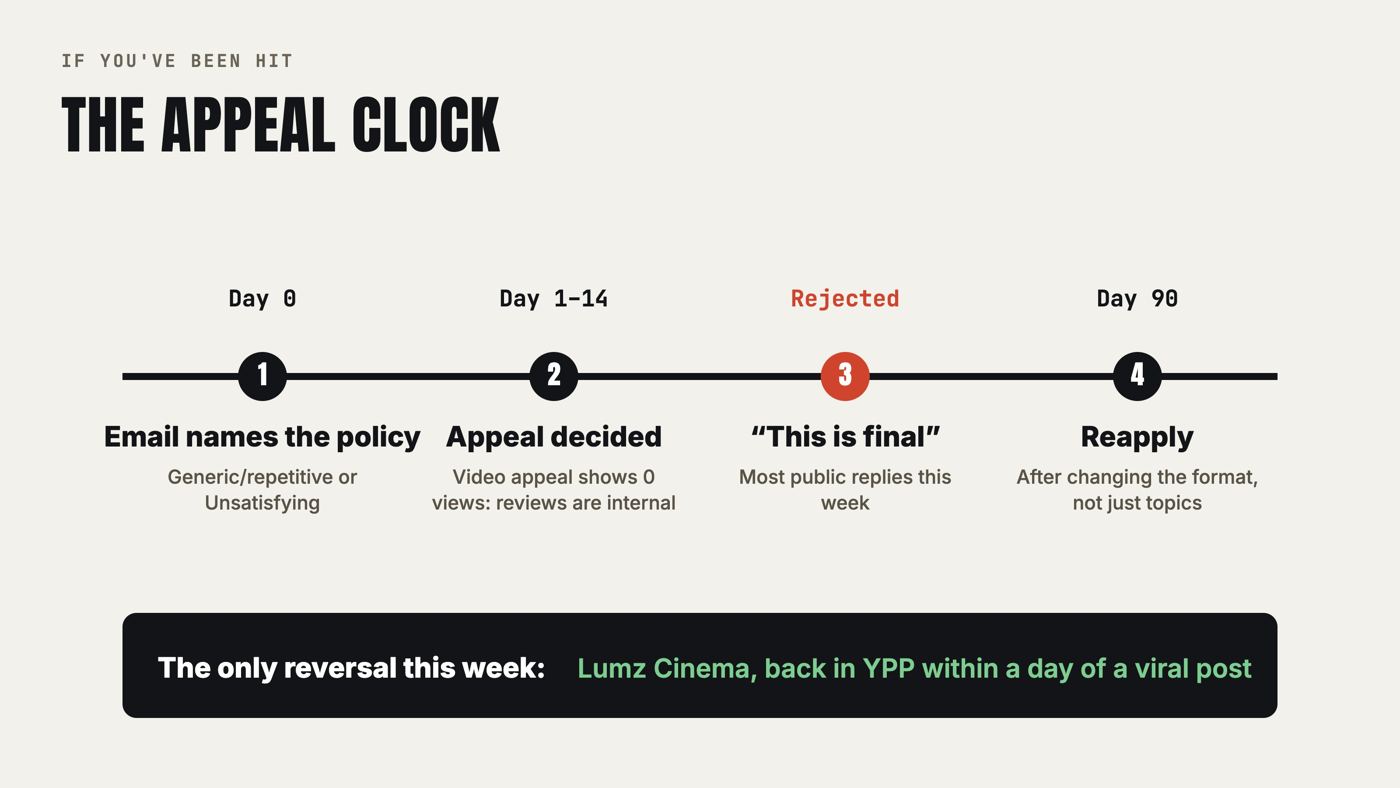
Request a human review of the automated decision
Appeal the channel decision, or reapply after 90 days
Many searches for "demonetized" are about one video losing ads. The November 2026 wave is the second kind: whole channels removed from the Partner Program, judged on the channel as a whole rather than on one upload.
Why so many channels were demonetized in November 2026
On 23 November 2026 one large network of faceless channels reported 14 channels demonetized in a single day, all made with the same automated video engine, and then unlinked about 320 channels built with fully automated tools. A public tracker of that network showed about 150 channels changing status the same day; most of those were unlinked rather than demonetized.
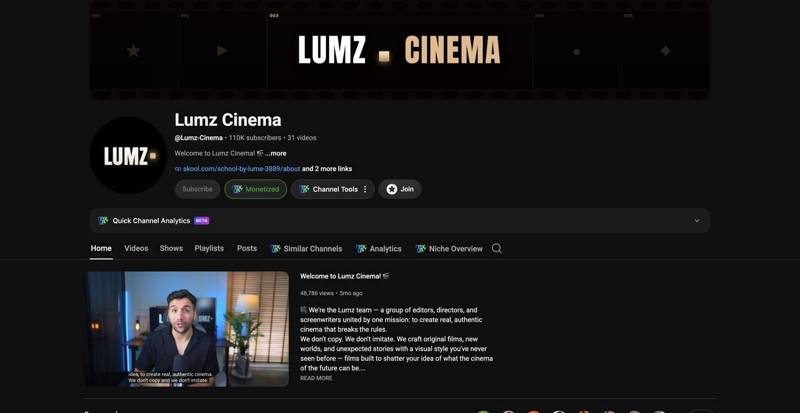
It was not only automated channels. Channels with hand-drawn maps, a team of animators, 30-person film studios and scripts written by hand asked TeamYouTube for a second look the same week. In about 65 public replies, TeamYouTube upheld all but one decision.
YouTube made no announcement and the notices do not name a video. What the replies show is how YouTube is reading its own policies, which the next sections set out reason by reason.
Every public @TeamYouTube reply about monetization from 20 to 24 November 2026 that named a policy or a reinstatement.
Reason 1: Generic or repetitive content (33 replies)
“Generic or Repetitive Content refers to content that looks like it's made with a template, or that might feel repetitive to viewers after watching several videos in a row from the same channel.”
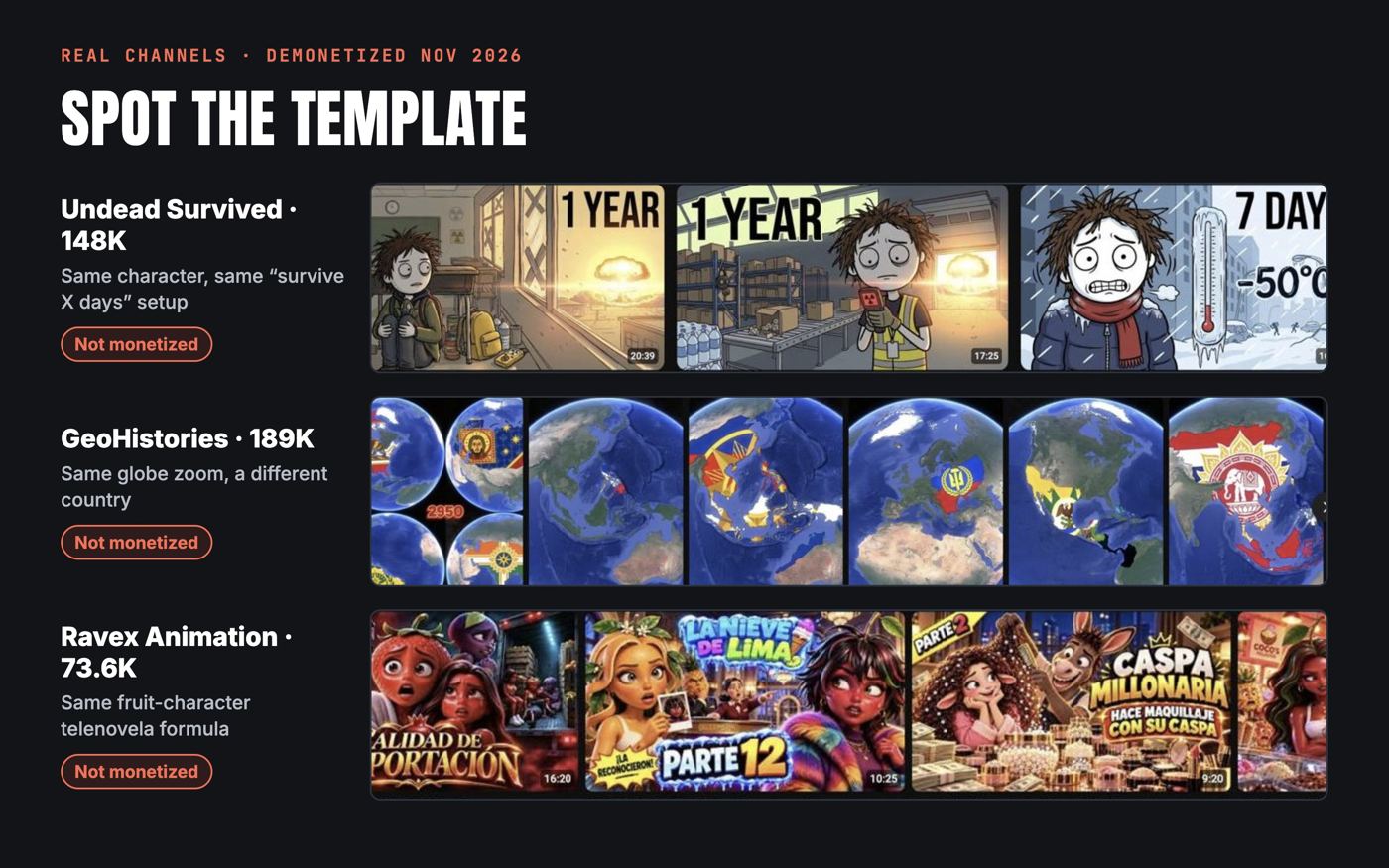
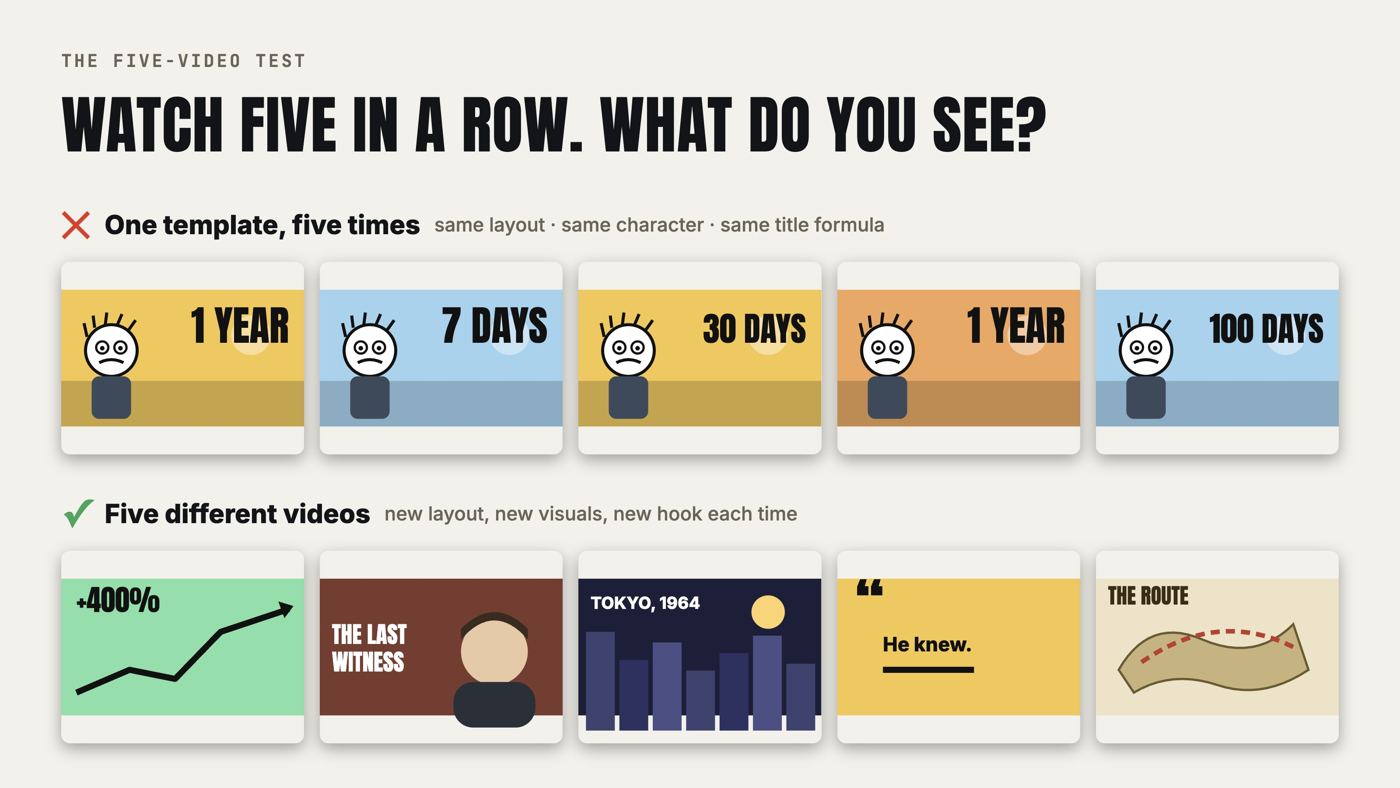
Every thumbnail uses the same layout, character or colour scheme.
Titles follow one formula ("I Survived X Days in Y", "Evolution of X").
The same voice, music bed, transitions and pacing on every upload.
One script skeleton with only the topic swapped.
A new channel publishing long videos every day from day one.
This was the most common reason by far. The test YouTube describes is not about one video: a reviewer watches several videos in a row from the same channel, and if they feel interchangeable the channel fails, however much work went into each one.
The YouTube policy behind it lists the patterns it means: similar or repetitive content with minimal variation across videos, characters put in the same situation over and over with the same outcome, image slideshows or scrolling text with little narrative, and "AI-generated content made with generic or unoriginal templates giving the impression of mass production".
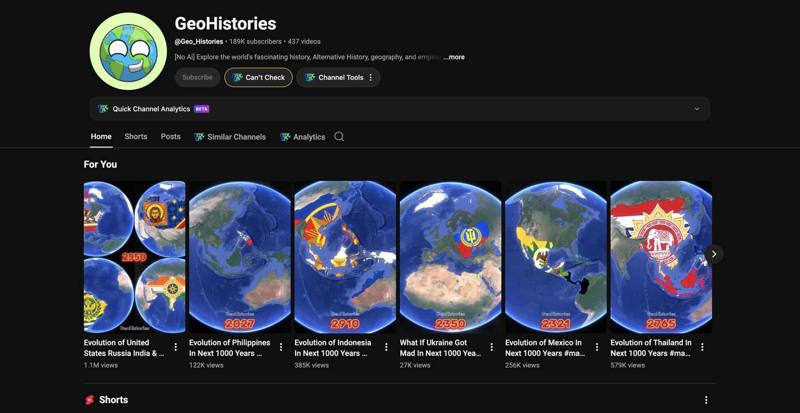
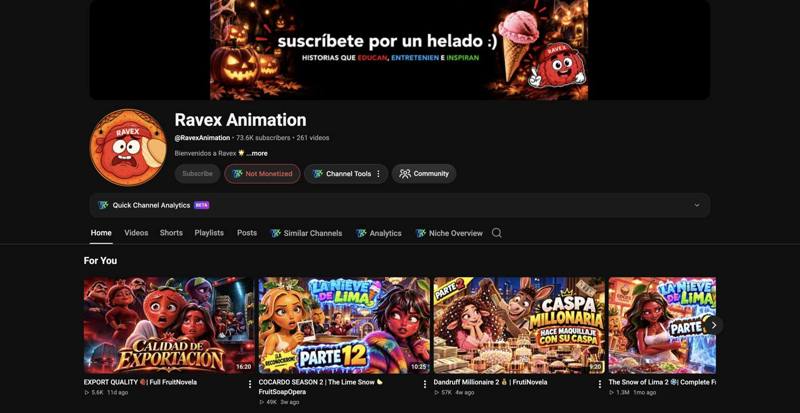
Thumbnail rows from Undead Survived, GeoHistories and Ravex Animation, all demonetized for generic or repetitive content. Each repeats one formula.
Reason 2: Unsatisfying or off-putting content (about 25 replies)
“Unsatisfying or off-putting refers to content that heavily relies on emotionally manipulative formulas, mimics existing formats or stories to a degree that the videos feel interchangeable, or appears designed to shock or surprise viewers for the sole purpose of getting views.”
Every story built on the same tear-jerk or outrage beat: the betrayal, the reveal, the rescue
Mimics existing formats or stories until videos feel interchangeable
Retelling the same kind of story with new names, or copying a popular channel's format
Designed to shock or surprise for views
Disturbing or nonsensical scenes, cliffhanger thumbnails the video never pays off
This reason hit story channels hardest: AI films, animated dramas, Bible stories and scripted fiction. TeamYouTube's definition has three parts, and a channel only needs to match one.
“We just confirmed that your channel has a number of videos w/ reused content, making it ineligible for monetization. Try reapplying for YPP after adding original commentary, educational value, or high-quality editing.”
Reused content means material that already exists on YouTube or elsewhere, used without significant original commentary or changes. It applies even with permission and even when the clips are licensed. Our page on the reused content policy has YouTube's full list of what is and is not allowed.
“A significant portion of your channel doesn't align with our policies, specifically around mass-produced content per our Inauthentic Content policies.”
Inauthentic content is the July 2025 name for what YouTube used to call repetitious content. In this case the creator had appealed an unsatisfying or off-putting decision, and the reply named a different policy: the reason in the email is not always the only one a reviewer will apply.
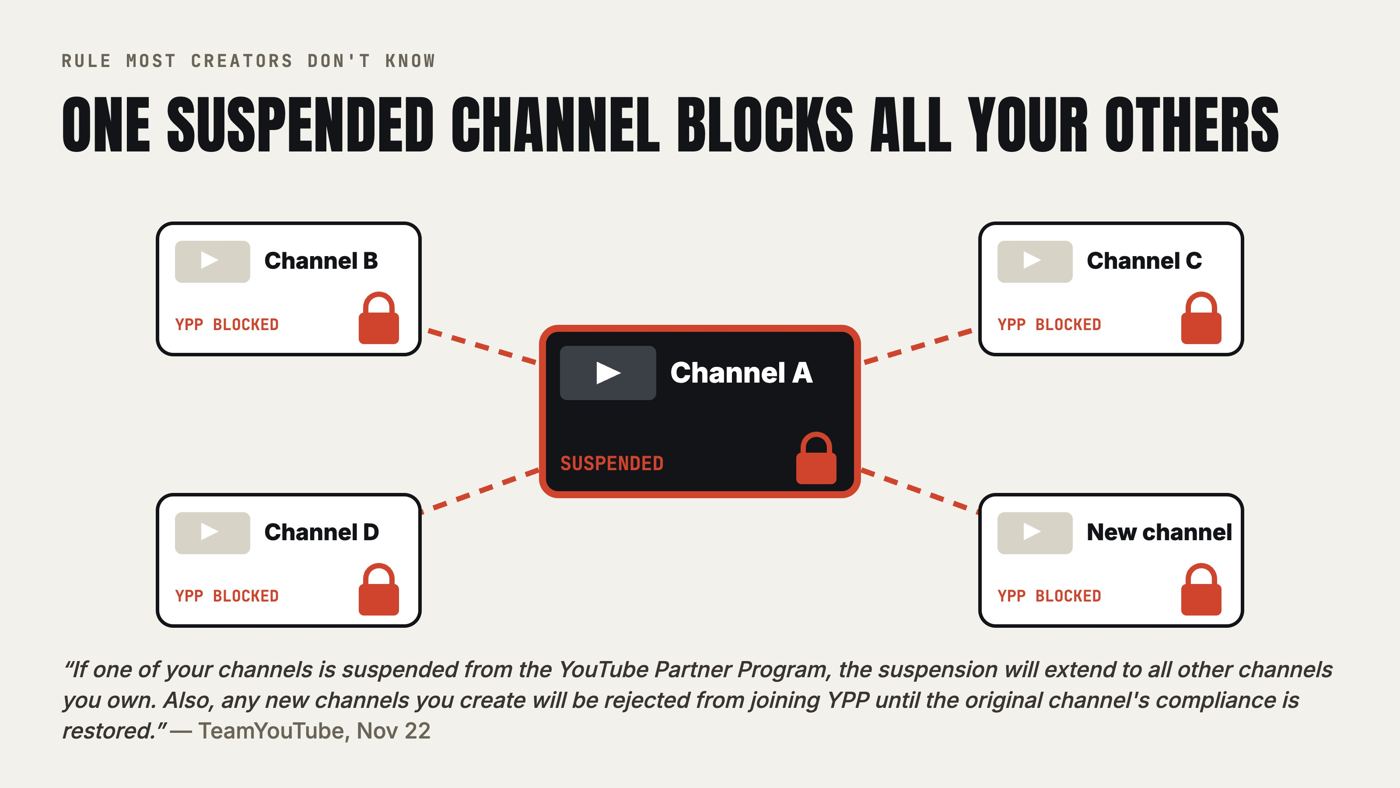
“If one of your channels is suspended from the YouTube Partner Program, the suspension will extend to all other channels you own. Also, any new channels you create will be rejected from joining YPP until the original channel's compliance is restored, and it's readmitted to the program.”
This is the rule that surprises people running several channels. A channel can lose monetization without anything wrong on it, because a sister channel was suspended. Starting a fresh channel does not get around it.
One suspension reaches every channel the same owner has, and blocks new ones.
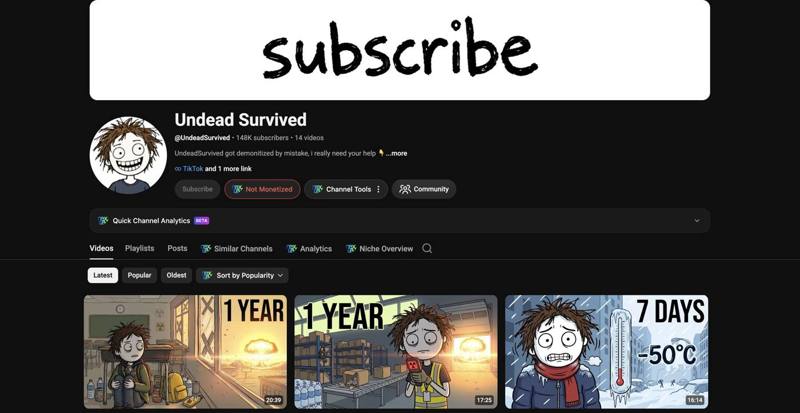
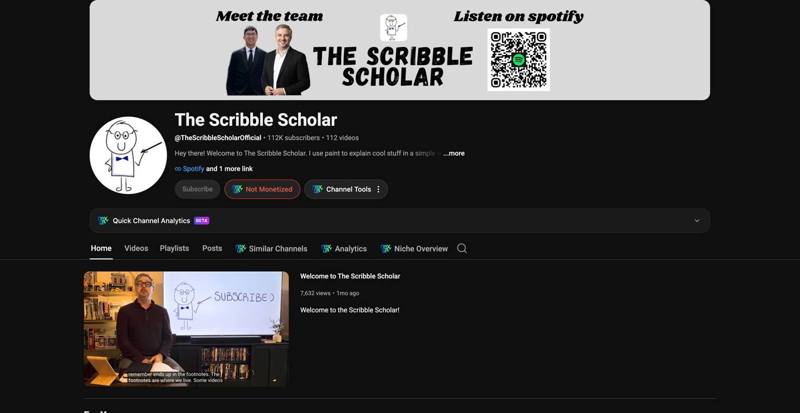
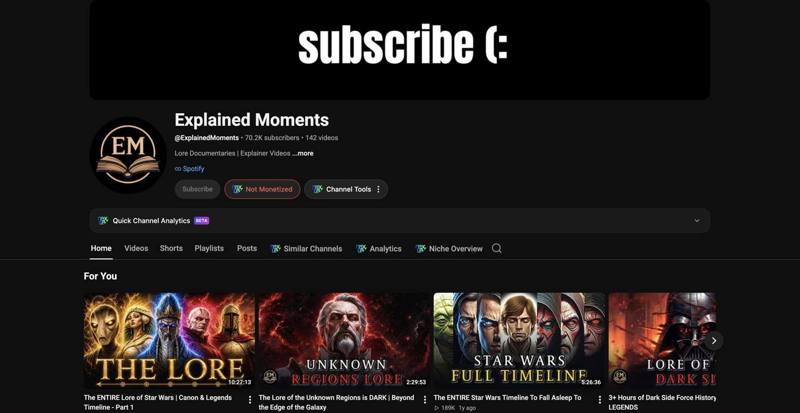
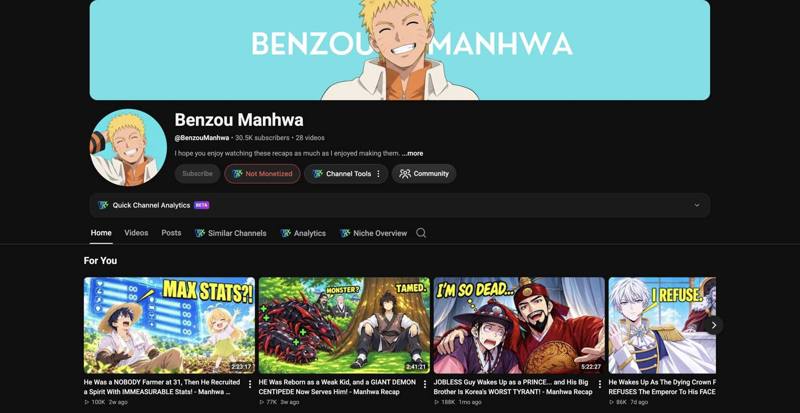
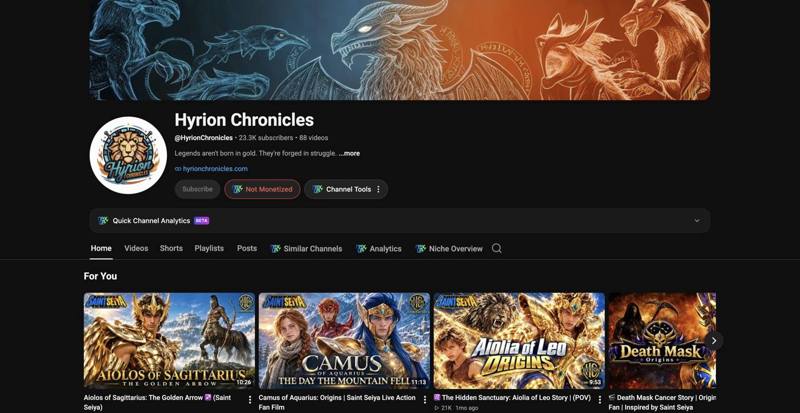
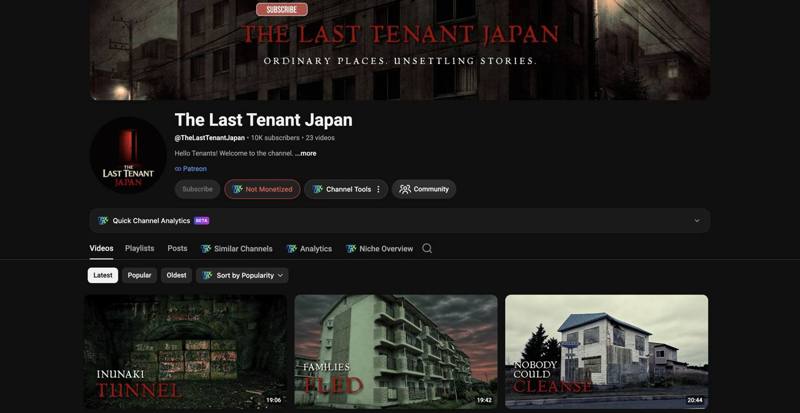
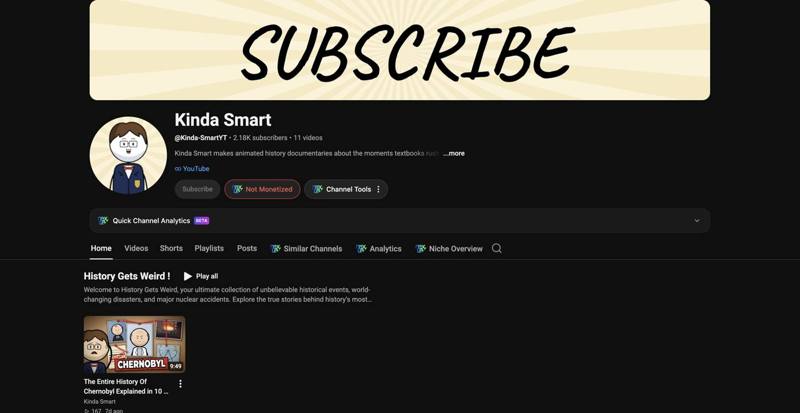
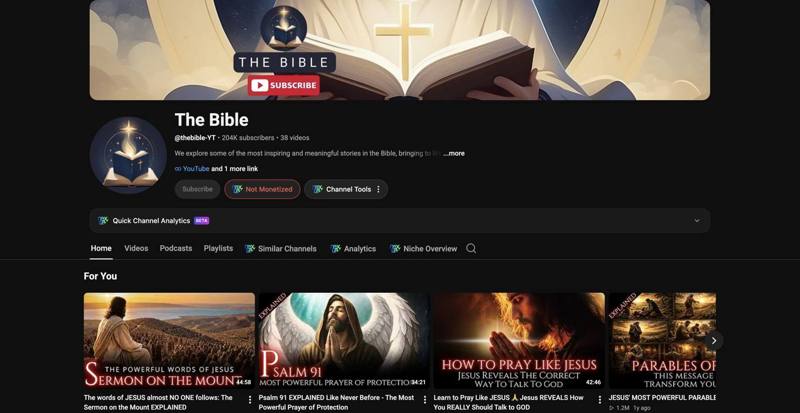
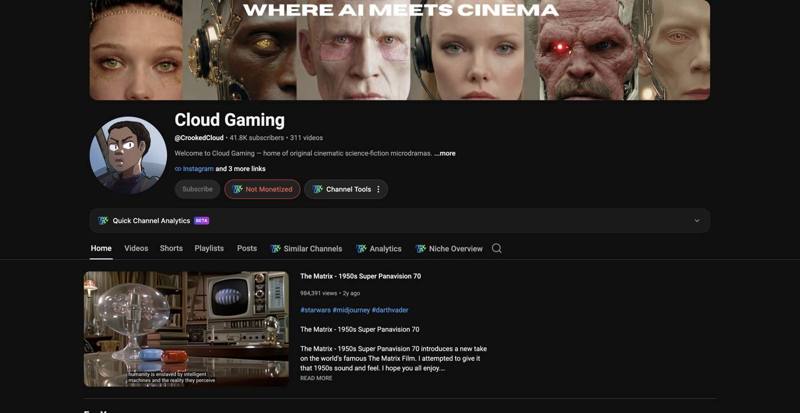
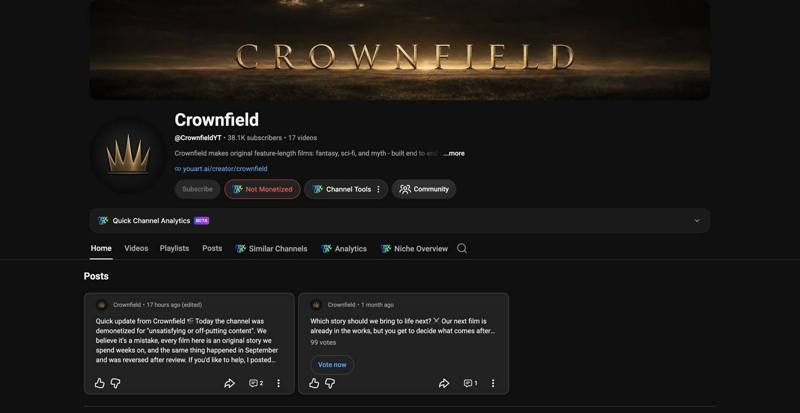
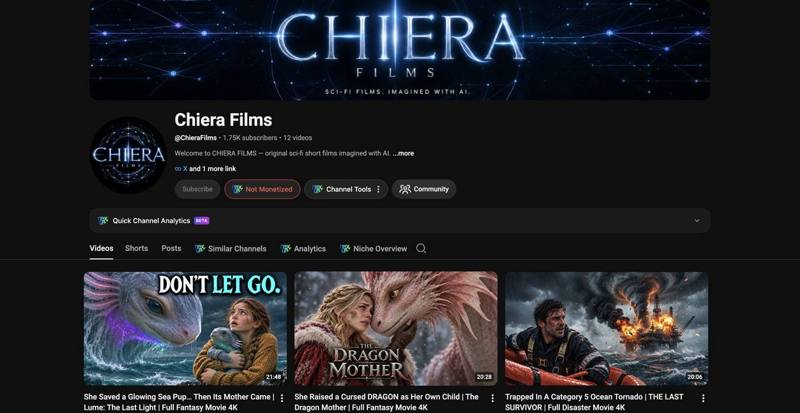
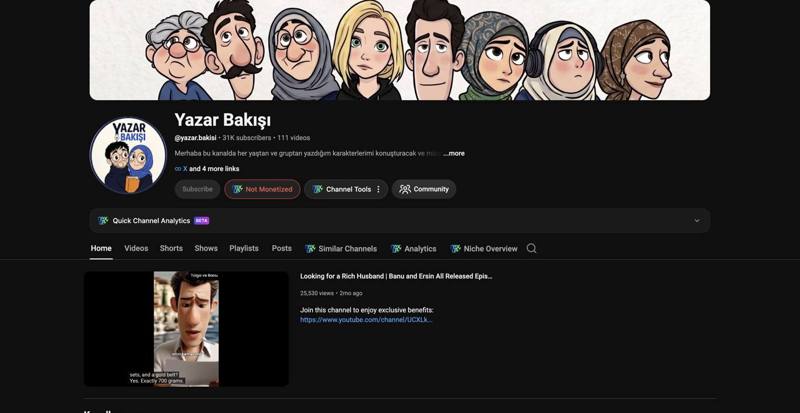
Fifteen of the channels that asked TeamYouTube for a review on X between 20 and 24 November 2026, each matched to its YouTube channel by name, handle and subscriber count. Screenshots of the channel pages were taken on 24 November 2026. Look at the thumbnail rows: on most of them, every video follows one template.
Undead Survived
148K subscribers
Generic or repetitiveNot monetized
Appeal denied in one day "without a single second of the appeal video being watched". Every thumbnail shows the same character in the same survive-N-days setup.
TeamYouTube replied"Content that appears generic, repetitive, or doesn't deliver significant creative, educational, or other value isn't allowed… reviews are done internally so it might not show as a view count on your video appeal."
Hand-drawn by a team of animators; the appeal video showed time-lapses and After Effects timelines.
TeamYouTube replied"After doing another review of your channel, we found that a significant portion isn't in line with our YPP policies on Generic or Repetitive Content."
"2 years, thousands of hours, 80 films… Every film tells a unique story."
TeamYouTube replied"Generic or Repetitive Content refers to content that looks like it's made with a template, or that might feel repetitive to viewers after watching several videos in a row from the same channel."
"After 90 days improving my content and 60 days waiting for remonetization, my channel was demonetized again."
TeamYouTube replied"After a manual review… Generic or repetitive content… We recommend reviewing our policies & making updates before re-applying to YPP in 90 days."
"Every Kinda Smart video starts as a script I write myself… That appeal video still shows 0 views."
TeamYouTube replied"After a manual review, we found that a significant portion of your channel doesn't align with our policies, specifically around Generic or repetitive content."
"I don't use emotional manipulation, misleading images or exaggerated stories just to get people to click."
TeamYouTube replied"A significant portion of your channel fails to comply w/ the YouTube Partner Program policies, specifically around Unsatisfying or off-putting content."
Original scripted fantasy comedy and sci-fi, monetized for years. Asked which characteristics triggered the finding.
TeamYouTube replied"Unsatisfying or off-putting refers to content that heavily relies on emotionally manipulative formulas, mimics existing formats or stories to a degree that the videos feel interchangeable, or appears designed to shock or surprise viewers for the sole purpose of getting views."
TeamYouTube replied"Human here. We've reviewed your channel & found that a significant portion is not in line with our YPP policies on Unsatisfying or off-putting content."
Appealed an Unsatisfying or off-putting decision; "over 300 comments show my audience was shocked."
TeamYouTube replied"A significant portion of your channel doesn't align with our policies, specifically around mass-produced content per our Inauthentic Content policies."
Generic or repetitive, unsatisfying or off-putting, reused and inauthentic are different findings with different fixes. Answer the one you were given.
2. Look at your channel the way the reviewer does
Open your last five videos in a row. If the thumbnails, titles, openings and pacing match, that is what the reviewer saw.
3. Record a short appeal video that shows your process
Show your research, your script and its edit history, and your editing timeline. Say what is yours in each video.
4. Fix the format, not only the topics
If you have to reapply after 90 days, change how the videos look and are structured, not just what they are about. One channel that only waited was demonetized again.
5. Ask in public, politely
Reply to @TeamYouTube on X with your channel link and the policy named in your email. TeamYouTube answered dozens of these in November 2026, and the one reversal followed a widely shared post.
Make every video look different from the last: vary thumbnail layout, title structure, visuals, music and pacing. Consistent branding is fine; copy-paste is not.
Never reuse an image, clip or intro sequence between videos.
Add a person: a short host intro, a real voice or an on-camera segment.
Write or heavily edit the script yourself, with research and an opinion. Change the hook and structure between videos.
Post like a creator: two or three videos a week on a new channel, published by hand.
Keep your channels separate, since one suspension reaches every channel you own.
Keep script drafts, project files and analytics; they are your evidence in an appeal.
This applies to every tool, Cliptude included. Cliptude writes a new script and builds new visuals for each video, but if you run one template, one voice and one thumbnail style on every upload, the channel can still read as templated. Vary the Look, the voice and the format between videos, and bring the topic and the point of view yourself.
The five-video test: would a viewer see five different videos, or one template five times?
It means YouTube has stopped a video or a channel from earning ad revenue. A single video can show limited or no ads under the advertiser-friendly guidelines; a whole channel can be removed from the YouTube Partner Program under its monetization policies.
Why is YouTube demonetizing channels in 2026?
In public replies between 20 and 24 November 2026, TeamYouTube cited generic or repetitive content 33 times, unsatisfying or off-putting content about 25 times, reused content twice and mass-produced inauthentic content once. All four come down to videos that feel interchangeable or add little of the creator's own.
What is generic or repetitive content on YouTube?
In TeamYouTube's words, content "that looks like it's made with a template, or that might feel repetitive to viewers after watching several videos in a row from the same channel."
What is unsatisfying or off-putting content?
TeamYouTube describes it as content that "heavily relies on emotionally manipulative formulas, mimics existing formats or stories to a degree that the videos feel interchangeable, or appears designed to shock or surprise viewers for the sole purpose of getting views."
Can one demonetized channel affect my other channels?
Yes. TeamYouTube says a Partner Program suspension extends to every other channel you own, and new channels are rejected from the program until the original channel is readmitted.
How long does a YouTube monetization appeal take?
YouTube says it responds within 14 days. If the appeal is rejected you have to wait 90 days before reapplying.
Why does my appeal video show 0 views?
TeamYouTube says reviews are done internally, so a reviewer watching your appeal video does not count as a view.
Do AI videos get demonetized?
Not for using AI. The policies target channels whose videos look templated or mass-produced, and hand-made channels were demonetized under the same rules this month. AI channels that publish one template many times are the most exposed.
Compare Cliptude plans
Plans from $19/mo, priced per finished minute. Cliptude has no free plan; watch the sample videos first to judge the output.