
Maths and physics visualised
How to start a faceless math animation YouTube channel
Famous equations, paradoxes and proofs explained slowly with animated formulas and graphs on black.
How Cliptude makes it: Faceless calm narration + one number or step per dark slide, plotted curves, bars
The reference channel: Animated Math
@AnimatedMathOfficial · joined 2026-06-30 · checked 14 November 2026
Why this niche works
- Animated Math is 123 days old, has only 17 videos and already 28,300 subscribers: about 1,660 subscribers per video.
- It is monetized at an estimated RPM of $4.06, so 180,621 monthly views make about $733 a month from roughly 3 uploads a month.
- Its median video gets 28,000 views and its best, a Schrödinger equation explainer, has 510K in 3 months, so it is not living off one fluke.
- Social Blade shows 176,590 views and +1.6K subscribers in the last 30 days, matching the monthly estimate.
Top videos on Animated Math



What a copy could earn
Videos a month × views per video × $4.06 RPM. Illustrations, not promises.
| Slow start | 8 × 4,000 | $130/mo |
| On pace | 12 × 30,000 | $1,462/mo |
| Breakout | 12 × 150,000 | $7,308/mo |
Competition
MediumMaths animation has a few big names, but most young channels either post 2-5 minute visual loops or stall after a handful of videos. Long, calm explainers that walk through one idea are still thin, and viewers subscribe readily.
| Channel | Subs | Avg views |
|---|---|---|
| MathMotion 228 days, 277 short (~5 min) simulation videos, est. ~$24,308/mo at a low $2.23 RPM |
39,600 | 240,887 |
| PolyaMath 985 days, only 27 videos, est. ~$1,751/mo |
46,000 | 102,846 |
| Lemma started ~1 month ago, 241 uploads, 624,980 monthly views, not monetized yet |
5,670 | 5,369 |
How the Claim Check Look matches
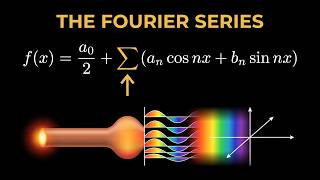
Animated Math narrates 15-30 minute explainers over black-background animation: formulas writing themselves on, graphs, gold and white accents; its thumbnails mix big formulas with 3D renders and the odd chalkboard. No offered Look animates typeset formulas, so Claim Check is the closest fit: a dark slate where each step of the argument sits on its own Briefing slide (one number or one line of working under a short headline), values compared as bars and every curve on Line chart callout. Write formulas in plain text ('23 × 22 / 2 = 253'); the Look does not typeset equations, write them on stroke by stroke, draw vectors or make 3D surfaces, so this is a calmer, slide-led version of the niche. Build the thumbnail separately (one big formula or number in yellow on black).
Make it in Cliptude
- 1Pick the Claim Check Look, format Faceless documentary, 12-20 minutes (the reference averages 22 minutes).
- 2Script shape: a surprising claim, the intuition, the actual calculation step by step, a graph, a real-world use, and where the intuition fails.
- 3In the prompt write every formula in plain text, one step per slide, and give the exact points of each curve for Line chart callout with its axes.
- 4Keep numbers exact and checkable (compute them yourself); viewers in this niche will correct you in the comments.
- 5Thumbnail reference: the Euler's identity thumbnail (one huge formula in white and yellow on black) with a promise-style title like 'Nobody explained X like this'.
- 6Post 3-4 deep videos a month rather than volume: the reference earns from 17 videos.
Math animation video title ideas
The formula Animated Math wins with: Nobody Explained [idea] Like THIS!, or The Most Beautiful [proof]
- Nobody Explained Euler's Identity Like THIS!
- The Monty Hall Problem: Why Switching Wins Two Times Out of Three
- The Birthday Paradox: Why 23 People Is Enough
- Why There Are Infinitely Many Primes: The Most Elegant Proof
- Nobody Explained Fourier Transforms Like THIS!
- Why the Square Root of 2 Can't Be a Fraction
Fresh titles in the same pattern. Check each story's facts before you script it.
Why 23 People Is Enough: The Birthday Paradox, Step by Step
A result almost everyone gets wrong, settled by one product and one curve: perfect for formulas writing themselves on.
A strange bet
Put 23 people in a room. What are the chances that at least two of them share a birthday? Most people guess something small. There are 365 days in a year, and only 23 people, so surely the chance is around one in sixteen. The real answer is about fifty point seven percent. Better than a coin flip. With 70 people it climbs past ninety-nine point nine percent. This is the birthday paradox. It is not really a paradox at all, just a place where intuition goes wrong. Let's see exactly why, with nothing more than multiplication.
On screen: Briefing slide '23 people' with the headline 'Chance two share a birthday?'; then '≈ 50.7%'; then '70 people: 99.9%'.
Counting pairs
The trick is to stop thinking about your own birthday. You are not the only one who can match. Any two people in the room can match each other. So how many pairs are there? The first person can pair with 22 others. The second with 21 new ones, and so on down. Altogether that is 23 times 22, divided by 2, which is 253 pairs. Two hundred and fifty-three separate chances for a match, each a small chance on its own. That is why the number climbs so fast. The room is not small. The number of pairs is big.
On screen: Briefing slide with the body line 'n(n−1)/2' and the number '253' over the headline 'pairs among 23 people'.
Turn it around
Counting matches directly is messy, so mathematicians flip the question. What is the chance that nobody shares a birthday? Ignore leap years and assume every day is equally likely. The first person can have any day: 365 out of 365. The second must avoid that day: 364 out of 365. The third must avoid two days: 363 out of 365. Keep going until the twenty-third person, who has 343 safe days out of 365. Multiply all those fractions together, and you get the probability that all 23 birthdays are different.
On screen: Briefing slide 'Flip the question: nobody shares'; body line '365/365 × 364/365 × … × 343/365'.
The number
Each of those fractions is close to one, but there are twenty-three of them, and they wear each other down. The product comes to about zero point four nine three. So the chance that everyone has a different birthday is a little under one half. That means the chance that at least two people share one is one minus that: about zero point five zero seven, or fifty point seven percent. Twenty-three is the smallest group where the odds of a shared birthday are better than even. With 22 people, it is still just under half.
On screen: Briefing slide number '≈ 0.493' with the headline 'all different'; then '1 − 0.493 ≈ 0.507'; bars for 22 people (0.476) and 23 people (0.507).
The curve
Now plot it. Number of people along the bottom, probability of a shared birthday up the side. The curve starts flat, because with a handful of people there are very few pairs. Then it bends upward steeply. At 23 it crosses one half. At 30 people it is about seventy percent. At 50, ninety-seven percent. At 57, it passes ninety-nine percent. And at 70 people it is ninety-nine point nine percent. To be completely certain, by simple counting, you would need 366 people, because only then are there more people than possible days, still ignoring leap years.
On screen: Line chart callout of the S-shaped curve from 0 to 70 people, called out at 23 (0.507), 30 (0.706), 50 (0.970) and 57 (0.990).
Where it matters
This is not just a party trick. The same maths decides how safe computer systems are. Many systems turn data into short codes called hashes, and a collision, two different inputs with the same code, can be a security problem. The birthday paradox says collisions appear far sooner than you would guess: roughly when the number of items reaches the square root of the number of possible codes. Attackers even use it, in what is called a birthday attack. That is why modern systems use codes long enough that the square root is still astronomically large.
On screen: Briefing slide 'Collisions likely near √N' with the kicker BIRTHDAY ATTACK; body line 'N = 365, √N ≈ 19'.
Why we guess wrong
Real birthdays are not perfectly spread out, and that actually makes shared birthdays slightly more likely, not less. So the true odds in a real room are at least as good as the ones we calculated. Our intuition fails because we picture one person looking for a match, when really every pair in the room is quietly rolling its own dice. Next time you are in a group of 23 or more, ask around. More often than not, two of you will share a day.
On screen: Final Briefing slide '23 people, 253 chances'.
Math animation channel questions
How many views does a math animation channel need to make $2,000 a month?
At the $4.06 RPM estimated for Animated Math, about 492,611 long-form views a month make $2,000 from AdSense. That is roughly 9 videos at this channel's average of 56,735 views each.
How much does a math animation YouTube channel make?
Animated Math is 123 days old with 28,300 subscribers and earns an estimated $733 a month from 180,621 monthly views. Sponsorships and affiliate income come on top of that.
Is math animation a good YouTube niche in 2026?
Competition is medium. Maths animation has a few big names, but most young channels either post 2-5 minute visual loops or stall after a handful of videos. Long, calm explainers that walk through one idea are still thin, and viewers subscribe readily. Channels to study: MathMotion, PolyaMath, Lemma.
Can you make math animation videos without showing your face?
Yes. In Cliptude, the Claim Check Look makes these videos from a script, with no presenter on camera: faceless calm narration, one number or step per dark slide, plotted curves, bars.
Make your first video in this niche
Open the Claim Check Look, paste the script above or your own topic, and Cliptude builds the narration, footage and on-screen boards.
Sources
Figures are estimates checked 14 November 2026, cross-checked on Social Blade and YouTube. Revenue is AdSense only and real RPM varies. Channel names and video titles belong to their owners; Cliptude is not connected to any channel listed. All 26 niches