
Hacker & Cybercrime Stories
How to start a faceless cybercrime YouTube channel
Documentary stories of famous hacks, worms, leaks and online manhunts, told like a thriller on a black screen.
How Cliptude makes it: Faceless narration + white-stage cards of people, pages, posts and emails, findings read word by word
The reference channel: Cybernews Kernel
@cybernews_kernel · joined 2026-08-07 · checked 14 November 2026
Why this niche works
- Cybernews Kernel posted only 5 videos in its first 99 days and still averages 332,800 views per video.
- Its ILOVEYOU virus story has 783K views and 'The Most Dangerous Stranger on the Internet' 699K, so old hacks pull new viewers.
- estimates put it at 654,638 views a month and about $1,925 a month at a $2.94 RPM; the RPM is low because the audience is young and global.
- The ceiling is higher on the internet-mystery side: Dark Silk (229 days old) earns ~$17,661 a month from 2,839,421 monthly views.
Top videos on Cybernews Kernel



What a copy could earn
Videos a month × views per video × $2.94 RPM. Illustrations, not promises.
| Slow start | 8 × 4,000 | $94/mo |
| On pace | 12 × 30,000 | $1,058/mo |
| Breakout | 12 × 150,000 | $5,292/mo |
Competition
MediumHacking search results are mostly tutorial channels with $2-4 RPMs; true story-driven hack documentaries are few and upload slowly. The bigger money is in adjacent internet-mystery channels, which this Look also fits.
| Channel | Subs | Avg views |
|---|---|---|
| ironic 1,318 days old, ~$3.0K/mo; teen hackers and crypto thefts, rare uploads |
110,000 | 314,526 |
| Pandemonium 948 days old, ~$2.9K/mo; dark-web and FBI-chase stories |
28,300 | 128,595 |
| Dark Silk 229 days old, ~$17.7K/mo; internet-mystery stories at $6.22 RPM |
45,000 | 283,897 |
How the Screen Trail Look matches
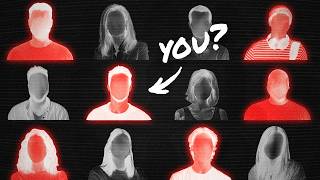
Cybernews Kernel is a black-field animated documentary: glowing red or neon line art, CRT scanlines, monitors and hooded figures, with one striking icon per thumbnail. Screen Trail takes an evidence-first route on a clean white stage instead: every picture of a person, place or old machine as a White stage card with a name tag, the posts, emails and pages of the story on Social comment card, Email evidence card and Removed page card, numbers on Analytics screen card or red-vs-green bars, and the key finding read word by word. It does not draw line-art characters, terminals or glitch cuts, and it uses no hacker stock footage; for a darker, sourced-briefing version use Claim Check as the second Look. Note the reference is backed by the Cybernews brand (videos are co-credited with Cybernews), so it is not a solo creator.
Make it in Cliptude
- 1Pick the Screen Trail Look (Claim Check as the second Look for a dark briefing version); format Faceless documentary.
- 2Set 15-25 minutes; the reference averages 19 minutes.
- 3Script shape: the moment it broke, who was behind it, how the attack worked in plain words, the chase, the arrest or aftermath, what it changed.
- 4Title template: 'The Most <superlative> <hack/virus> Ever: <name>' or 'The Day <thing> Got Hacked'.
- 5Thumbnail reference: Cybernews Kernel's single glowing icon (envelope, skull terminal) on black with no text.
- 6Prompt: give the dates, the systems hit and the people; paste the real emails, posts and bulletins you want shown, and ask for White stage card with a name tag for each person, Email evidence card for each message and the one finding read word by word.
Cybercrime video title ideas
The formula Cybernews Kernel wins with: The Most [extreme] [thing] Ever: name it, then the twist
- Stuxnet: The Code That Physically Destroyed Nuclear Centrifuges
- WannaCry: The Ransomware Stopped by a $10 Domain Name
- Kevin Mitnick: The Most Wanted Hacker in America
- The Target Breach: How Hackers Got In Through the Air-Conditioning Contractor
- NotPetya: The Cyberattack That Shut Down the World's Biggest Shipping Company
- The 2020 Twitter Hack: How a Teenager Took Over Obama's Account
Fresh titles in the same pattern. Check each story's facts before you script it.
The Worm That Broke the Internet in One Night (1988)
The first internet worm, a famous name behind it and a first-ever felony conviction: a clean, fully documented hacker story.
8:30 p.m.
November 2, 1988. 8:30 in the evening. A small program is released onto a computer network at the Massachusetts Institute of Technology. It does not delete files. It does not steal anything. It simply copies itself to another computer, and then another. By the next morning, thousands of machines across America are slowed to a crawl or frozen completely. Universities, research labs and military sites are all hit. The internet then was tiny, maybe sixty thousand computers. And in one night, a single program had broken a large part of it. Its author was a twenty-three-year-old graduate student. Most of the people on it were researchers, students and government scientists.
On screen: White stage card title 'Nov 2, 1988, 8:30 p.m., MIT' read word by word; White stage card photo of a 1980s computer room tagged 'MIT'.
Who wrote it
His name was Robert Tappan Morris, a computer science graduate student at Cornell University. He later said he wanted to measure how big the internet was. He released the worm from MIT, reportedly so it would not be traced straight back to Cornell. Morris was not an outsider. His father, Robert Morris, was a well-known computer security expert at the National Security Agency. That detail made the story irresistible to the newspapers. But in 1988 most Americans had never heard the word internet, let alone the word worm. They were about to learn both. He was about to become the most famous programmer in the country, for all the wrong reasons.
On screen: White stage card photo tagged 'Robert Tappan Morris, Cornell graduate student'; Social comment card of a period news report on the worm; White stage card title with the focus on 'worm'.
Four ways in
The worm used four ways into a computer. First, a debug mode in sendmail, the program that handled email, which let it send itself as a message and run. Second, a flaw in the finger service, which told you who was logged in; the worm overflowed it with too much data and took control. Third, trusted connections between computers that let users log in without a password. And fourth, guessing weak passwords, using simple variations of the user's own name and a short list of common words. Any one of these could open the door. Some of these weaknesses were known to experts, but many machines had simply never been fixed.
On screen: Four White stage card tags in turn: sendmail, fingerd, rsh/rexec, passwords, each on the line that names it.
One in seven
The real disaster came from one decision. Morris worried that administrators could fake a signal saying a machine was already infected, to block the worm. So he told it to copy itself anyway, about one time in seven, even when a computer said it was already infected. On a network of sixty thousand machines, one in seven was far too often. Computers were infected again and again until they ran so many copies they could do nothing else. The usual estimate is about six thousand machines infected, roughly ten percent of the internet. Morris realised what was happening and tried to help. A friend sent an anonymous message explaining how to stop the worm, but the network was so jammed that it arrived too late to matter.
On screen: White stage card bars: ~6,000 infected against ~60,000 machines, red against green; White stage card title 'one in seven' with the focus on 'seven'.
The cleanup
System administrators worked through the night, pulling machines off the network and sharing fixes by phone and email, when email still worked. Some sites stayed disconnected for days. Estimates of the cost varied wildly. An expert report for the U.S. General Accounting Office put it anywhere from one hundred thousand to ten million dollars. Courts later heard that removing the worm cost individual sites between two hundred and fifty-three thousand dollars each. In response, the Defense Advanced Research Projects Agency funded a new team at Carnegie Mellon University: the Computer Emergency Response Team, known as CERT.
On screen: White stage card tagged 'CERT/CC — Carnegie Mellon'; Analytics screen card for the damage estimate '$100,000 — $10,000,000'.
The first felony
Morris was charged under the Computer Fraud and Abuse Act of 1986. United States versus Morris became the first felony conviction under that law. Prosecutors had asked for prison time. Instead, he was sentenced to three years of probation, four hundred hours of community service and a fine of ten thousand and fifty dollars, plus the cost of his supervision. Morris went on to an extraordinary career. He became a professor at MIT and co-founded the startup accelerator Y Combinator with Paul Graham. The worm itself became a museum piece, and a warning. His lawyers argued he never meant to cause damage, but in 1991 the appeals court upheld the conviction.
On screen: White stage card 'United States v. Morris'; title 'the first felony conviction under that law' read word by word, focus on 'first'; the sentence on a White stage card.
Patch notes
One program. Four open doors. One bad number, one in seven. And an internet that learned, overnight, that it needed security. If you want more stories about the hacks that changed the web, subscribe, and tell us in the comments which cyberattack we should break down next. Every security team on Earth now works with ideas that were born that night: patch the known holes, never trust a connection blindly, and have a team ready to answer the call at three in the morning. It all started with one student's experiment.
On screen: Final White stage card title 'one bad number'; end card.
Cybercrime channel questions
How many views does a cybercrime channel need to make $2,000 a month?
At the $2.94 RPM estimated for Cybernews Kernel, about 680,272 long-form views a month make $2,000 from AdSense. That is roughly 2 videos at this channel's average of 332,800 views each.
How much does a cybercrime YouTube channel make?
Cybernews Kernel is 99 days old with 23,400 subscribers and earns an estimated $1,925 a month from 654,638 monthly views. Sponsorships and affiliate income come on top of that.
Is cybercrime a good YouTube niche in 2026?
Competition is medium. Hacking search results are mostly tutorial channels with $2-4 RPMs; true story-driven hack documentaries are few and upload slowly. The bigger money is in adjacent internet-mystery channels, which this Look also fits. Channels to study: ironic, Pandemonium, Dark Silk.
Can you make cybercrime videos without showing your face?
Yes. In Cliptude, the Screen Trail Look makes these videos from a script, with no presenter on camera: faceless narration, white-stage cards of people, pages, posts and emails, findings read word by word.
Make your first video in this niche
Open the Screen Trail Look, paste the script above or your own topic, and Cliptude builds the narration, footage and on-screen boards.
Sources
Figures are estimates checked 14 November 2026, cross-checked on Social Blade and YouTube. Revenue is AdSense only and real RPM varies. Channel names and video titles belong to their owners; Cliptude is not connected to any channel listed. All 26 niches