
Breaking disaster news, one event per video
How to start a faceless disaster news YouTube channel
Fast breakdowns of one disaster in the news right now: what happened, where, why it is escalating and what comes next.
How Cliptude makes it: Faceless narration + sourced slides marked established, disputed or unknown, a globe, cut-aways, trend charts
The reference channel: Crisis Radar
@CrisisRadar1 · joined 2026-01-24 · checked 14 November 2026
Why this niche works
- Crisis Radar is about nine months old and makes an estimated $12,860 a month: a $6.40 RPM on 2,009,440 monthly views.
- It posts about 8 videos a week (278 so far), each about one event in the news, and they average 54,901 views with a median of 20,000.
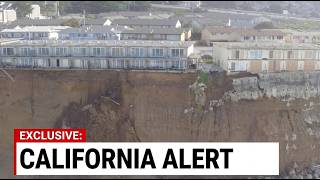
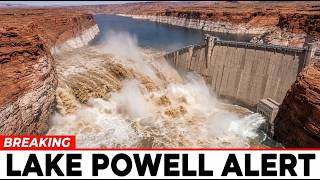
- Its biggest videos are single stories with a hard number in the title: Lake Jackson losing 12 billion gallons (548K), Lake Mead at 26% (547K), California homes sliding into the sea (500K).
- Social Blade confirms 2M views and +1.9K subscribers in the last 30 days, matching the monthly estimate.
Top videos on Crisis Radar



What a copy could earn
Videos a month × views per video × $6.40 RPM. Illustrations, not promises.
| Slow start | 8 × 4,000 | $205/mo |
| On pace | 12 × 30,000 | $2,304/mo |
| Breakout | 12 × 150,000 | $11,520/mo |
Competition
HighDisaster news is crowded and fast: several channels under a year old earn $1,000+ a month, and the biggest pull tens of thousands. Speed and volume win, so this suits someone who can publish within a day of each event.
| Channel | Subs | Avg views |
|---|---|---|
| Project Nightwatch 232 days, 2-hour disaster news, RPM $12.06, ~$1,095/month |
38,900 | 22,813 |
| EARTH SIGNAL 114 days, Nepal and Himalaya flood stories, not monetized yet |
15,600 | 21,193 |
| Earth Lens old channel, weather and fault news, ~$41,401/month, the ceiling of the lane |
107,000 | 50,989 |
How the Claim Check Look matches
Crisis Radar's own description says every video breaks down what happened, where it is happening (with maps), why it is escalating and what is likely next, based on official updates; its titles are capitalised headlines with one hard number. Claim Check is built for that: one fact per Briefing slide on a dark slate with its status (established, disputed or unknown) and the agency that gave each figure, Night globe focus for where it is happening, Wireframe terrain cutaway for a seabed or slope, Line chart callout for a rising toll or reading, and officials' words on quote slides. Footage is kept to a small share and shown dimmed inside a slide; for detailed maps of the region use Geo Explained as the second Look.
Make it in Cliptude
- 1Pick the Claim Check Look (Geo Explained as the second Look for maps) and the Faceless documentary format; 10-15 minutes, like the reference.
- 2Script shape: open on the single most shocking fact, then what happened, where, why it is escalating, what officials say, and what to watch next.
- 3In the prompt, name every place for Night globe focus, and paste 3-4 real headlines with outlet names to quote on Briefing slide.
- 4Use only official numbers (geological survey, space agency, national weather office) and say who gave each one.
- 5Thumbnail reference: Crisis Radar's style; one dramatic satellite or aerial image, one huge number, a red alert bar.
- 6Publish within 24 hours of an event and aim for at least one video a day; the reference posts about 8 a week.
Disaster news video title ideas
The formula Crisis Radar wins with: [PLACE] [DRAMATIC VERB]: [number] + what just changed (fill in with this week's event)
- [Lake] DROPS to [X]%: What the Low Water Just Revealed
- [Town] Sinkhole Swallows [thing] Overnight
- [Volcano] Erupts: What Satellites Saw in the First 24 Hours
- Cliff Erosion Pushes [coast] Homes Toward the Sea
- Record Floods Hit [region]: The Before-and-After Maps
- [City] Breaks Its Heat Record: What It Means This Summer
Fresh titles in the same pattern. Check each story's facts before you script it.
The Volcano That Cut Tonga Off From the World
A complete one-story breakdown of the 2022 Hunga Tonga eruption, the template for any 'one event, explained' video, with a world map of countries and plenty of satellite imagery.
The blast
On January 15, 2022, an underwater volcano in the South Pacific exploded with a force scientists would later compare to several million tons of TNT. Satellites watched a shockwave ring spread across the ocean in minutes. The boom was heard in Alaska, more than nine thousand kilometres away. Its plume shot higher into the sky than any volcanic plume ever measured. And within hours, an entire country, the Kingdom of Tonga, went silent. No phone calls. No internet. No news. This is the story of the Hunga Tonga eruption, and why the world could not reach Tonga for days.
On screen: Briefing slide 'Volcano cuts Tonga off' with the kicker BREAKING, status established; Night globe focus on Tonga, then Alaska.
What happened
The volcano is called Hunga Tonga-Hunga Ha'apai, and most of it sits under the sea, about sixty-five kilometres north of Tonga's capital, Nuku'alofa. It had been rumbling since December. Then, on January 15, magma met seawater in the volcano's shallow crater. Water flashed to steam, the pressure built in an instant, and the whole thing exploded. A preliminary NASA estimate put the blast at somewhere between four and eighteen megatons of TNT, hundreds of times the bomb dropped on Hiroshima. The new land that had grown there since 2015 vanished completely, and large parts of the two older islands beside it were gone too.
On screen: Night globe focus on Hunga Tonga-Hunga Ha'apai; Briefing slide '65 km from Nuku'alofa'; Wireframe terrain cutaway of the mostly underwater volcano.
A plume to space's edge
The numbers kept getting stranger. Satellites measured the eruption plume at around fifty-seven kilometres high, reaching the mesosphere, above the layer where weather happens. It was the tallest volcanic plume ever recorded. The explosion also sent a pressure wave through the atmosphere that travelled around the entire planet several times, picked up by weather stations from New Zealand to the United Kingdom. And it hurled a huge amount of water vapour, about one hundred and forty-six million tonnes, into the stratosphere, raising the water there by roughly ten percent. Scientists are still studying what that does to the climate.
On screen: Briefing slide number '57 km' with the headline 'Plume into the mesosphere' and its source; quote slide from science coverage with the outlet's name.
The wave
The eruption also pushed out tsunami waves across the Pacific. In Tonga, waves of up to fifteen metres hit some islands, washing away homes on the smaller ones. Tsunami warnings went out in Japan, New Zealand, Chile and the United States. The most surprising damage came more than ten thousand kilometres away, in Peru. Two people drowned on a beach in the north of the country, and near Lima, thousands of barrels of oil spilled while a tanker was unloading at a refinery. The refinery blamed the unusual waves, though the cause was disputed. Peru declared an environmental emergency.
On screen: Briefing slide 'Waves up to 15 m in Tonga', status established; Night globe focus across Japan, Chile, Peru and the United States; Briefing slide on the oil spill near Lima.
The silence
Back in Tonga, the problem was not just damage. It was silence. Tonga connected to the world through a single international fibre-optic cable, and the eruption broke it, along with the domestic cable to the outer islands. Ash covered the islands and grounded flights. Families overseas could not reach relatives for days. The first clear picture came from surveillance flights by New Zealand and Australia, showing islands coated in grey ash. Aid ships arrived carrying fresh water, because ash had contaminated water supplies. It took about five weeks to repair the international cable, in late February, and the outer islands waited even longer.
On screen: Briefing slide 'Tonga's only cable cut', status established; Briefing slide 'About 5 weeks offline'; Night globe focus on New Zealand and Australia.
The toll
For an explosion that big, the human toll was small, and that was partly luck and partly preparation. Tonga reported at least three deaths, and two more people died in Peru. Many Tongans moved to higher ground as soon as the first warnings went out. But the damage to homes, farms and water supplies on the outer islands took a long time to repair, and some island communities had to be resettled elsewhere. For a country of about one hundred thousand people, spread across more than one hundred and seventy islands, rebuilding meant ships, aid flights and a great deal of patience.
On screen: Briefing slide numbers 'At least 3 deaths in Tonga' and '2 in Peru', each with its source; Briefing slide '170+ islands'.
What to watch
So what did the world learn? First, that a volcano mostly hidden under the sea can produce one of the largest explosions in modern history with little warning of how big it would be. Second, that a whole country can be cut off by one broken cable, which pushed Tonga and its neighbours to look at backup links, including satellite internet. And third, that the effects can travel thousands of kilometres, from Alaska to Peru. Hunga Tonga has been much quieter since. Scientists are watching it, and others like it, more closely than ever. Because the next one might not wait for a warning.
On screen: Final Briefing slide 'Scientists keep watch', status unknown for what comes next; end card.
Disaster news channel questions
How many views does a disaster news channel need to make $2,000 a month?
At the $6.40 RPM estimated for Crisis Radar, about 312,500 long-form views a month make $2,000 from AdSense. That is roughly 6 videos at this channel's average of 54,901 views each.
How much does a disaster news YouTube channel make?
Crisis Radar is 278 days old with 27,700 subscribers and earns an estimated $12,860 a month from 2,009,440 monthly views. Sponsorships and affiliate income come on top of that.
Is disaster news a good YouTube niche in 2026?
Competition is high. Disaster news is crowded and fast: several channels under a year old earn $1,000+ a month, and the biggest pull tens of thousands. Speed and volume win, so this suits someone who can publish within a day of each event. Channels to study: Project Nightwatch, EARTH SIGNAL, Earth Lens.
Can you make disaster news videos without showing your face?
Yes. In Cliptude, the Claim Check Look makes these videos from a script, with no presenter on camera: faceless narration, sourced slides marked established, disputed or unknown, a globe, cut-aways, trend charts.
Make your first video in this niche
Open the Claim Check Look, paste the script above or your own topic, and Cliptude builds the narration, footage and on-screen boards.
Sources
- https://www.youtube.com/channel/UC3nXyl9GjmikfiEtNk0FOjQ/videos
- https://socialblade.com/youtube/channel/UC3nXyl9GjmikfiEtNk0FOjQ
- https://en.wikipedia.org/wiki/2022_Hunga_Tonga%E2%80%93Hunga_Ha%CA%BBapai_eruption_and_tsunami
- https://earthobservatory.nasa.gov/images/149474/hunga-tonga-hunga-haapai-erupts
- https://www.jpl.nasa.gov/news/tonga-eruption-blasted-unprecedented-amount-of-water-into-stratosphere
- https://science.nasa.gov/earth/earth-observatory/dramatic-changes-at-hunga-tonga-hunga-haapai-149367
- https://www.ox.ac.uk/node/7655056
- https://gulfnews.com/amp/story/world%2Famericas%2Ftonga-eruption-gets-blame-for-peru-oil-spill-11000-kilometers-away-1.1642574857273
- https://news.mongabay.com/2022/03/oil-spill-contaminates-wildlife-beaches-and-protected-areas-in-peru
- https://blog.cloudflare.com/tonga-internet-outage
- https://www.aljazeera.com/news/2022/2/23/tonga-internet-reconnected-five-weeks-of-volcanic-eruption
- https://www.npr.org/2022/02/22/1082483555/tongas-internet-restored-5-weeks-after-big-eruption
- https://www.rnz.co.nz/international/pacific-news/467890/people-forced-to-move-within-tonga-following-volcano-and-tsunami
- https://tongastats.gov.to/census-2/population-census-3/census-story/
Figures are estimates checked 14 November 2026, cross-checked on Social Blade and YouTube. Revenue is AdSense only and real RPM varies. Channel names and video titles belong to their owners; Cliptude is not connected to any channel listed. All 26 niches